| What have been your personal "peak moments," the times when you felt your whole life change? What have been the experiences that have made you feel touched by something beyond the ordinary? On Saturday night, Jews will celebrate Shavuot, the the Festival of the Giving of the Torah. In many ways, Shavuot is the Jewish people's collective "peak moment."
Traditionally, this holiday is understood to be the anniversary of the day when God pronounced the Ten Commandments to Moses and the Israelites from atop Mount Sinai. The Ten Commandments are a prominent symbol in our tradition.
| | Interestingly, though, the actual text of the Ten Commandments is not prominent in Jewish tradition. The Ten Commandments are not included in the extensive liturgy of Jewish daily worship. It is very rare that an artistic representation of the two tablets includes the complete text. In fact, the words of the Ten Commandments are generally only heard in the synagogue on Shavuot and when they are read as part of the weekly Torah portion. We do not recite them daily, as we do with other biblical passages
There are historical reasons for this. Early in the rabbinic era, the Ten Commandments were read as part of the morning service, in the place where we now recite the blessing Ahavah Rabbah, which speaks of God’s love in giving us the entire Torah. The rabbis appear to have dropped the Ten Commandments from this place because their inclusion gave the impression that these ten laws were the most important. But, Judaism is a tradition of 613 commandments, not ten. The Ten Commandments say nothing about dietary laws or observing holidays other than Shabbat. They do not command us to provide for the needs of the poor or to actively pursue peace and justice in the world.
Dropping the Ten Commandments from the liturgy may have been a response by the rabbis to early Christianity, which sought to de-emphasize the laws of the Torah and to create a “pared down list” of the most important mitzvot. The rabbis rejected this idea and sought to dispel the notion that the Ten Commandments were superior to the other 603. The Ten Commandments do have great meaning and significance in Jewish tradition. It is just that the importance of the Ten Commandments is more about the moment of their revelation than about the specific laws that are included in the actual text.
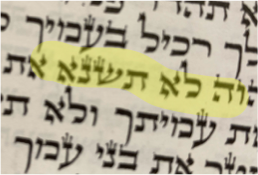
The chasidic rabbi, Menachem Mendel of Rimonov, actually taught that the words of the Ten Commandment are incidental to the essential experience of God communicating to us. He wrote that, at Mount Sinai, God spoke only the first letter of the first word of the Ten Commandments—the silent letter Aleph. The contemporary Jewish thinker, Rabbi Arthur Green, says of this claim, “God speaks only the great silence; the Divine is a silent womb that contains all of language within it.”
Is there a contradiction here? Was the moment of God’s revelation to Israel a moment of a profound ethical teaching, surrounded by shofar blasts and cosmic upheaval, or was it one of preternatural silence? Perhaps it was both. Mount Sinai is the moment that symbolizes the Jewish people's link to God. Like a personal moment of deep meaning and life-changing intensity, Sinai may be described as the cosmic event in which we feel an internal avalanche that shakes the foundations of our being and our view of the world. It also may be a moment of stunning calm and equanimity in which we feel that we see the world with new clarity. Perhaps this is why Jewish tradition describes the moment of Sinai in such contradictory terms—it is both the storm and the calm at its center. Many people who have experienced a moment of personal spiritual intensity say that they continue to carry it with them for many years after. The afterglow of that moment comes back at the times when it is needed most, when we feel that life has left us tattered or disconnected from the world. We can think of the Ten Commandments as the Jewish people’s collective afterglow from our Sinai moment. We felt God within us at that mythical moment at Sinai and ever after we have wanted to carry some reminder of it with us in our soul. We are just like the person who says during a spiritually intense moment, “God, I promise that, from now on, I’m going to live my life differently.” At Sinai, we vowed that we would abide by a fundamental code for living lives that are ethical, virtuous and meaningful, and the feeling has stayed with us.
Pre-K students in our Early Childhood Learning Center celebrated their "Stepping Up" ceremony at the Temple today. These beautiful, wonderful children are saying goodbye to the ECLC as they prepare for Kindergarten next fall. Here is the talk I gave on the occasion.
There is nothing like the pride that parents feel when they see their children take another step toward becoming the remarkable people they are going to be. Your parents have already seen you smile for the first time. They heard you say your first word, watched your first steps, and they were amazed when you first started really playing with other children.
You cannot imagine yet how difficult it was for them the first time they had to say goodbye to you when they dropped you off for the day. Even though they knew that you would have an awesome time at the Early Childhood Learning Center (and you did), they fought back their tears when they said, “Bye-bye, Sweetie. Have a great day.” That is because letting go is hard, even when it’s something that you have to do. Today is another day like that. Your teachers, Miss Amy, Miss Bridgette, Cantor Beth and I are all so proud of you today. We have seen you take so many steps here at Temple Beit HaYam. We saw you learn to play imaginary games by yourself and with others. We saw you get along with other kids, even kids who were new to you. We saw you learn how to share with others. We saw you develop respect for your classmates and confidence in yourself. We saw you make beautiful artwork, sing songs with joy, and learn some letters, too. You amaze us. We are so proud of you for who you are. And it is hard for us to let go. Even though we know that you will have an awesome time in Kindergarten (and you will), we are sad to say goodbye to each one of you. We want to say to you, “Bye-bye, Sweetie. So long, Sport. Take care, Dear One. We love you and we will miss you. Have a fantabulous time in Kindergarten.” Letting go is hard, even when it’s something that we have to do. You have been a part of our Temple’s family and you always will be. We want you always to feel free to come back and visit us any time you want. We’ll share our toys with you and remember all the great times we have had during your time at Temple Beit HaYam. At Friday Tot Shabbat, I will sing Bim Bom and think of you. You can think about us, too.
With a love for all that is sacred about first words, first steps, making friends and learning how to be caring and giving person, we offer our gratitude to the God of Everyone and Everything for this special moment of saying goodbye and wishing you well. Amen.
| Singing in a group is an inherently spiritual experience. It is no coincidence, I think, that every religious tradition has some practice of group singing. There is something about blending ones voice with the voices of others that has the ability to transport us out of ourselves and into a larger reality.
| The choir of Bevis Marks Synagogue in London, the oldest synagogue in the United Kingdom. | This week's Torah portion, I think, says something about that experience. Parashat Bamidbar describes how the Israelites were encamped around the Tabernacle whenever they stopped their march through the wilderness. Each tribe had its own special place close to the portable Temple that was understood to be the dwelling place of God. As one would imagine, everyone wanted to get as close to they could to the God who saved them and sustained them through the desert. Yet, there was a special place for the tribe of Levi, the tribe that included the priests and the men who were designated to care for and carry the Tabernacle. They were given the place closest to the Tabernacle and, according to a classical midrash, the other tribes made room for them there. They withdrew to allow the Levites to have the place closest to God (Midrash Numbers Rabbah 1:12). Rabbi Yehudah Leib Alter of Ger, the author of the Sefat Emet, wonders whether the camping arrangement would have caused resentments. He says, "Surely, there must have been some Israelites of great deeds who were of greater merit than the least of the Levites." Why would they have to yield their place close to the Tabernacle in order to make way for some guy who had the job of carrying the tent poles? To the Gerer Rebbe, the midrash teaches a lesson in humility. He says that, "Even someone great in deeds must know and believe that none of his deeds could overturn the choice of the Blessed One." Your own estimation of yourself should never be a substitute for the reality that God has delivered to you. You think that your smarts and accomplishments make you more deserving of honor than someone else? Back off, my friend. You think your piety is deeper and makes you more worthy of praise than some poser? It is all a dangerous illusion. Real piety knows the bounds of humility. The commentary goes further. The true ideal is that we nullify ourselves (להתבטל). We should stand amongst the Jewish people and lose any sense of separation from them. It is like that experience singing in the congregation. We lose awareness of our own voice and enter into the experience of being part of something larger than ourselves. The Gerer Rebbe says, "You should submit yourself to serve God with dedication only because it is the Blessed One’s will, and you should not think that your deeds are a means to draw closer to the Blessed One. Knowing this, how is it possible for you to hold yourself higher than even the least of Israel." When have you had that experience? What transports you into moments when you lose yourself and feel yourself to be a part of God? In those moments, do you, too, forget the desire to get closer to God and discover yourself simply tumbling down the rabbit's hole that, paradoxically, brings us the closest we can be to God? Other Posts on This Topic: Vayikra: The Joy of ContritionThe Blind and the Light"Not One of Them Was Left"
Stop me if you've heard this one:
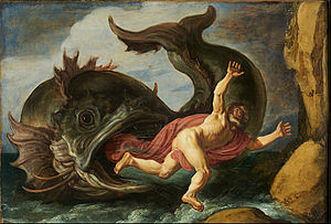
Man says to God, "Is it true what the psalm says, 'A thousand years in Your sight are as a moment that has passed'? (Psalms 90:4)"
God says, "Yes."
"Then is it also true that a million dollars to you are as but a penny?"
"Yes, that is also true."
"God, may I please have a penny."
"Sure. Wait just a moment."
This is the address I will present today at the baccalaureate services for the students of Jensen Beach High School and South Fork High School.
"For you are a people consecrated to the Lord your God: of all the peoples on earth the Lord your God chose you to be God's treasured people. It is not because you are the most numerous of peoples that the Lord set heart on you and chose you—indeed, you are the smallest of peoples; but it was because the Lord favored you and kept the oath God made to your ancestors that the Lord freed you with a mighty hand and rescued you from the house of bondage, from the power of Pharaoh king of Egypt.”
—Deuteronomy 7:6-8.
I want to congratulate this year’s graduating class, and I want to remind you of something you already may be thinking about today. I want to remind you—as you prepare for the journey of the rest of your lives—that you already have travelled a long way to get to this day. As you look forward to what is to come, it is worthwhile, also, to look back and appreciate the journey so far. You all have benefited from parents and other caregivers who have given you a start in life. You may not be aware of it all the time, but the people who raised you have poured a tremendous amount of hope and expectation into your future. Their wishes for your happiness and fulfillment are a big part of what makes each of you the person you are, and the person you are to become. They may not tell you all the time, but, in you, they see their own legacy. To them, you are the fulfillment of their wish to have lived a meaningful life. Maybe that explains the times when they have been too insistent, or, perhaps held you to an impossibly high standard. To your parents, you are more than you. You represent, at times, a part of their desire to correct the pain of their own past and to do something good in this world. As you continue through life, live for yourselves. Know that your hopes and your achievements are your own. But also know that the spark that powers who you are today, and who you will be in the future, owes a little bit to the people who love you the most. The people who are shedding a few tears today to see you all grown up and ready to take on the world—they are a part of you forever. Don’t forget that. You also have benefited from teachers, here in High School, but also dating back to that day when you first entered a classroom and called someone “teacher.” You all have had teachers you have loved, people who inspired you and challenged you to learn more than you thought you could. Perhaps, you also have had teachers who bored you, teachers who you thought expected too much from you—or too little—but they, too, have taught you lessons that will help you through life. I know that people don’t usually think of teachers this way when they are in High School—I know that I didn’t—but this is a truth that you should know about your teachers: Everything they have done, they have done for you. You are the reason your teachers have worked so hard to get you to learn, even when you sometimes have given up on yourselves. You are the reason they have stayed up late grading mind-numbing quantities of papers. You are the reason they put up with public school bureaucracies. They teach because they are addicted to the satisfaction they experience in seeing young people learn, grow and become the people they are meant to be. Today is a day for appreciating all that your teachers have done for you. To your parents, your caretakers and your teachers, you are treasured people. They have set their hearts on you. They have chosen to dedicate a piece of their lives to you. You carry with you the tremendous gift of being worried over, cared for, prized and doted upon. Believe me, I remember that carrying that gift can sometimes feel like an unwanted burden when you are 17 or 18 years old. You may be thinking, “If they do all this to me because they chose me to be their treasure, I wouldn’t mind if they would choose someone else for a change.” I have felt that way in my life, too. In the Bible’s book of Deuteronomy, Moses makes a speech to the Israelites to prepare them for the final journey they will take into the Land of Israel. Moses has led them for forty years, ever since the day that God delivered them from being slaves in Egypt. Moses knows that he will not be able to enter the Land of Israel with them, but he has this one last chance to teach them the things he believes they need to hear before they go. Now, I’m not Moses, and you all are not the ancient Israelites, freed from Egypt. But we do have some things in common. I am not going where you are going, and—in the long-run—neither are your parents, caregivers and teachers. You, too, have reached a juncture in life in which you will enjoy some new freedoms, but also some new responsibilities. Everything you do, good and bad, will truly be your own now. Like the ancient Israelites, you carry with you some baggage of your past. You have known times that have constricted your souls and you have integrated those difficult experiences into who you are today. Like the ancient Israelites, you have an opportunity to turn the hardships of your past into the possibilities of your future. Moses told the Israelites, “God has chosen you to be God’s treasured people.” That’s a message that you should hear today as if it were whispered to you personally, in your ear. You are treasured, not because you are the best football player, the fastest sprinter, the best writer, the sharpest science student, or even for being Miss Congeniality. You have been chosen as a treasure—as we all are—because you are you. This idea of being “chosen,” as you may know, is part of my faith tradition. For thousands of years, the Jewish people have been known as the “Chosen People.” And, believe me, there have been plenty of times in Jewish history when my people have felt like saying to God, “We wouldn’t mind if You would choose somebody else for a change.” But the big idea of being the “Chosen People” is not just about being favored, and it is not about past victimization. It is about living up to some pretty serious expectations that each person should have for him or herself. It is not enough to know that you are chosen; you must also ask, what mission have I been chosen for? Being chosen means living, always, with the intention of being the best person you can be. It means doing what you know in your heart is right, even when it is inconvenient. It means remembering your past and the path you have traveled. It means making yourself worthy of the privilege of being treasured. You are a treasure—all of you. There may be times you doubt yourself and times that you think the odds are stacked against you, but you have been given a chance to fulfill the hopes and expectations that your very life and existence represent. You have been given a chance to make your successes your own, to aspire as no one has ever aspired before you, to make your own difference in the world. You are loved. You are treasured. Moses did not tell the Israelites to go off to college, get a career, get a comfortable house to live in, and get a good looking car to drive. That is not why you are here, and it’s not the mission for which you were made. Moses, instead, told the Israelites just this, “Remember that God freed you with a mighty hand and rescued you from the house of bondage from the power of Pharaoh king of Egypt.”
My challenge to you today, my friends, is to remember. Remember the people who have placed their hopes in you. Remember to keep looking back to your core values and to what you most deeply believe in. That is how you will stay true to your mission. Remember that you have received a gift beyond value. Remember that you carry within you the possibility of redemption from whatever Egypt in your past might enslave you. Remember to make your life matter. Remember that you are a treasure. May you be strong and of good courage as you continue on life’s journey.
| Not long after I arrived in Florida, a congregant told me about the Treatment Center where he works as an administrator, a place for people whom the criminal justice system has deemed to be mentally ill or mentally incompetent. He asked me if I would be willing to visit the Center to talk with its few Jewish residents. I told my new congregant that I would be honored to help his residents.
| | There was a long process before I could be approved to volunteer at the Center. I made my first trip to visit its residents during Passover last month. I visited again today, meeting with three adult Jewish men who have been found "not guilty by reason of insanity" (NGRI) by a Florida State Court. There is a lot of misunderstanding about the insanity defense and what happens to people who are determined to be not responsible for their actions due to mental illness. Many people believe that defendants who are found NGRI are allowed to walk out of the courtroom and reenter normal society. Nothing could be further from the truth. The three men I met with today all have been charged with violent crimes. After being found NGRI, they were sent to the Treatment Center, or other similar facilities. Technically, the Center is not a prison, but it might as well be one. It is a maximum security facility with lots of guards, lots of tall fences with razor wire, and lots of heavy metal doors that can only be opened by a security guard watching over a video monitor. Trying to escape is a bad idea. The facility is surrounded by nothing but miles of flat land with little cover, and plenty of alligators and poisonous snakes. The biggest difference between this facility and a prison is that the residents (that's what they call them) receive psychotherapy and medications to treat their illnesses. They also receive training on how the legal system works. This is especially important for residents who have been determined to be "not competent to proceed to trial" (NCP). The goal of the Treatment Center is to make them competent, so the Center teaches them about the charges they face in court, what those charges mean, and how the court system will deal with them. It is understandable that the three Jewish men with whom I met today are not very happy about being in the Treatment Center. They are glad not to be in a state prison, where there is more violence and where their mental health problems would go mostly untreated. Their fondest hope is to be transferred to a lower security facility, or, even better, to a halfway house where they could begin a transition to freedom. That day could come in a few years for some of them, maybe sooner, or maybe never. Not knowing how long they will have to wait for freedom is very difficult for them. I spent about an hour with the men today. We talked about this week's Torah portion ( Behar-Bechukotai), especially the part about how all Hebrew slaves in ancient Israel were released during the jubilee, which came every fifty years. The idea of having a definite date of liberation, even one many years in the future, would be appealing to these men. I also answered their questions about Judaism. For the most part, they asked the same types of questions I hear all the time from people who want to know more about Judaism. One resident asked me if the tattoo on his shoulder would prevent his body from being buried in a Jewish cemetery. ( No, that's a myth.) Another resident asked, "When did Israel last have a Jewish king?" ( First century c.e.). "Could there ever be another king of Israel?" (Depends on whom you ask). The conversation got to be the most interesting when we talked about divine reward and punishment. It is not surprising that these men wanted to know what Judaism teaches about God's punishment for sin. Does Judaism teach that sinners are punished with hellfire? Why do good people suffer in this lifetime? Do we live in a just universe? Does God not care about the suffering of the innocent? If you are sitting in a prison after the state has told you that you are not guilty and that you are not responsible for your actions, these questions become rather poignant, wouldn't you say? People with mental health problems often feel like they live in a metaphoric prison—held captive by a mind that inhibits normal interaction with other people, distrusted and scorned by people who fear them. In addition to that, these men live in a real live realty of razor wire and locked doors. Well, it's enough to make anyone crazy. Clearly, the Treatment Center is the right place for these men, even if it is depressing for them to be confined without much freedom. They are receiving treatment for their illnesses. They are safe. They are being cared for by a professional staff that treats them with courtesy and all the dignity possible under the circumstances. They even get visits from local clergy, if that helps. Still, no one would volunteer or choose to live in the Treatment Center. According to the state of Florida, these men did not willfully choose to do the things that got them here. Yet, here they are. And, I have to add, it's a good thing, too. Do we live in a just universe? I'm not sure anyone can answer that question for these men. I'm just grateful for the opportunity to help people who could really use some. Other Posts on This Topic:Ekev: Deuteronomy vs. JobBehar-Bechukotai: Cycles of TimeTazria: Newborn Spirituality
| Jewish time turns in cycles and cycles within cycles. The most basic of these is the cycle of a single day which is made up of nighttime and daytime. Seven days make a week, with its pattern of six days of work and one day of Shabbat rest.
We usually think of the weekend as a time for ourselves after a week of working for others, but the Torah says just the opposite. "The seventh day is a Shabbat for Adonai your God" (Exodus 20:10). The six days of work are for us. Shabbat belongs to God.
| "Proclaim liberty throughout all the land, unto all the inhabitants thereof." -Leviticus 25:10 | In last week's Torah portion, Emor, we learned about a larger cycle, also built on the number seven, that we are experiencing right now. The Counting of the Omer is a "a week of weeks" (seven times seven days) that connects the festivals of Passover and Shavuot. In this week's Torah portion, Behar-Bechukotai, the number seven radiates into an even larger cycle, the cycle of seven years that culminates in the Sabbatical Year. For six years you plant your field and six years you prune your vineyard and harvest their produce. But in the seventh year there will be a complete rest for the land, a Shabbat for Adonai. You shall not plant your field or prune your vineyard. You shall not reap the aftergrowth of your harvest or gather the grapes of your untrimmed vines. It shall be a year of complete rest for the land. (Leviticus 25:3-5) Seven years is a long time. In our society, which seems to have a short attention span, we do not really have any major institutions that run on that long of a cycle. Our presidential elections and the Olympic Games run on four-year cycles, which seems to be about as long as we can focus on anything. We do have a national census on a ten-year cycle, but that does not command the attention of an entire society the way that elections do…and certainly not the way that a society would be focused on a national commitment to refrain from planting and harvesting food for a full year. There is a scholarly debate about whether the cycle of the Sabbatical Year was ever observed in ancient Israel the way it is described in Leviticus. It does seem dangerous. The Torah promises that a year of extra abundance would proceed the Sabbatical year to provide enough food. But what of the surrounding nations that could take advantage of the Sabbatical Year to attack the nation while it is vulnerable? There are those who say that the Torah presents the practice more for its ideals than for practical implementation. What is that ideal? The point of the Sabbatical year is stated plainly in the text. God says, "The land is Mine, and you are foreigners residing with Me" (Leviticus 25:23). This idea is stretched even further in another cycle, seven times as long, also presented in this week's Torah portion. In the year that followed the end of seven Sabbatical Years (a total of 49 years) there was an extra year added to the cycle (a fiftieth year) that was called the Yovel (usually translated as "Jubilee Year"). In that year, not only were the fields left fallow for a second year in a row, all the fields that had been sold in the previous fifty years were returned to the original owner. All Hebrew slaves were freed in the Yovel.As a side note, one cannot help notice the common theme in the Torah of cycles of time in the pattern of "seven plus one." The seven-day festival of Sukkot is followed by the one-day festival of Sh'mini Atzeret on the eighth day. The Counting of the Omer is seven weeks followed by an extra day to reach the festival of Shavuot on the fiftieth day. The Yovel is the largest "seven plus one" pattern, with an extra, fiftieth year to cap off the cycle of seven seven-year cycles. There must be a reason… The words from this week's Torah portion that introduce the Yovel also are of interest for their connection to American history. "Proclaim liberty throughout all the land unto all the inhabitants thereof" (Leviticus 25:10), is the biblical quotation engraved upon the Liberty Bell that announced American independence from the British Monarchy in 1776. Ironically, though, we think of the Liberty Bell as a symbol of autonomy—the right to live as we choose to live. In the Torah, it is clear that the message of the Yovel year is, again, just the opposite. All of the earth is God's and God makes the rules; we cannot permanently own anything. There is something quite beautiful about these large cycles in time, whether or not they were ever observed exactly as they are described in the Torah. They acknowledge that the earth has its own integrity and its own need for rest. "Owning" a piece of land does not entitle any human being to use it however he or she wishes. At best, we may have a piece of land temporarily assigned to us, but even that cannot undermine our obligation to treat the land with respect and give it the year of rest that is sacred to God. The same, of course, is true of human lives. We cannot be owned. We do not even own our own lives. In a cycle that takes up most of a typical human lifespan, we are reminded that our existence is temporary and beyond our control. Our highest aspiration in life, therefore, should not be to amass wealth or power, but rather to do joyfully all that we can to serve the higher purpose for which we were made. Our lives do not belong to us. We belong to God. Perhaps that is the lesson that we rehearse in small and large cycles throughout our lives. Yet, it requires a lifetime to learn it completely. Other Posts on This Topic:Behar: Do Not Wrong One AnotherBechukotai: Being Commanded, Choosing Joy
| This week, President Barack Obama responded to a question on national television about marriage rights for gay and lesbian couples. He said, "I've been going through an evolution on this issue. I have always been adamant that gay and lesbian Americans should be treated fairly and equally… I have just concluded that, for me personally, it is important for me to go ahead and affirm that I think same-sex couples should be able to get married."
| | The president later went further to justify his position in religious terms. He said, "Obviously this position may be considered to put [Michelle and me] at odds with the views of others but, you know, when we think about our faith, the thing at root that we think about is, not only Christ sacrificing himself on our behalf, but it's also the Golden Rule, you know, treat others the way you would want to be treated" (paraphrasing Leviticus 19:18, "Love your fellow as yourself").
Predictably, this has set off a torrent of statements from religious conservatives who oppose marriage rights for gays and lesbians. Just as the president did, they have claimed that their position is rooted in the Bible.
The Rev. Bryant Wright, president of the Southern Baptist Convention, called Obama's statements "a calculated, politically expedient decision that completely ignores the biblical foundation of marriage." The Rev. Leith Anderson, president of the National Association of Evangelicals, said, "The evangelical community is broadly committed to define marriage as between one man and one woman and will not accept an unbiblical definition."
Each side claims that their position is informed by the Bible. Can they both be right? What, exactly, does the Bible say about marriage and homosexuality? Does the Bible define marriage, as Rev. Anderson states, as "one man and one woman"?
Not much and not really.
Both the Hebrew Bible and the Greek Scriptures (which Christians call the "Old Testament" and the "New Testament") have opinions and laws regarding marriage, but there is no one, consistent view throughout. What is clear, though, is that the biblical view of marriage is very much unlike modern conceptions of marriage.
For example, the idea of fidelity in marriage only works in one direction in the Bible. The sin of adultery is limited to the case of a man who takes another man’s wife. Because the Bible permits polygamy, a man cannot commit adultery by having multiple sex partners, as long as none of them is married to another man (Leviticus 20:10).
Marriage, in some parts of the Bible, is defined by nationality. In the books of Ezra and Nehemiah, marriage is exclusively limited to the union of two Israelites. All other marriages were null and void. (Ezra 9:12, Nehemiah 9:2).
Also, marriage in the Bible could be coerced. The book of Deuteronomy defines rules for a man to acquire as wife a woman captured in battle (Deuteronomy 21:10-14). There are circumstances in which a man is required to marry a woman whom he has raped (Deuteronomy 22:28-29).
Contemporary Judaism and Christianity do not accept marriage as it is defined in the Bible. Both traditions, over the centuries, have created new models for marriage in which both partners mutually agree to marry and in which both partners are bound by oaths of fidelity. To claim a single "biblical" or "traditional" definition of marriage, as have the opponents of equal marriage, is to invent an idealized past and to deny thousands of years of change.
And the change and adaptation are ongoing. Marriage today is not the same institution as it was even two hundred years ago, let alone two thousand. Before the Civil War, most states in the United States gave married women little control over the property they brought into a marriage. A woman's rights to buy, sell and to keep the money she earned was given to the husband upon marriage. Part of the effective definition of marriage in that era was the acquisition by a man of the wealth and livelihood of his wife. Times do change, and so does marriage.
Some opponents of equal marriage claim that marriage between gay and lesbian couples violates the Bible's denunciation of sexual relations between two men. Indeed, Leviticus does say that for a man "to lie with a man, in the manner of lying with a woman," is an "abhorrence" or an "abomination" (to'eivah in Hebrew; Leviticus 18:22 and 20:13). This is a strong condemnation, but it is not the only time the word is used in the Bible.
Other practices were equally abhorrent to the Bible's culture of more than 2,000 years ago. The word to'eivah is used to revile the eating of shellfish (Leviticus 11:10), a woman wearing men's clothing (Deuteronomy 22:5), a man remarrying a woman he previously had divorced (Deuteronomy 24:4), and the practice of predicting the future from signs (Deuteronomy 18:9-12), to name a few. There certainly are religious communities that observe these prohibitions strictly to this day. I, myself, do not eat biblically prohibited food like shrimp and lobster, but I would not want to see those foods banned for everyone. I am quite certain that we will not see religious conservatives filing legislation to ban crab cakes and pants suits as "abhorrences."
Central to the faith of many religious people today is the concept of continuing revelation. As human beings continue to learn about our world, we continue to develop new understandings of the Divine will. Slavery, for example, is ordained by the Bible, but it is universally condemned today as a violation of religious values. Many today similarly see the need to reconsider the ancient attitudes towards homosexuality expressed in the Bible.
Will legal acceptance of equal marriage damage the institution of marriage? Quite the contrary. Marriage strengthens society as a whole. We want people to get married. We want all people to formalize their loving relationships so they will benefit from the support of the community. We want to impress people with the serious nature of the marriage commitment. Denying gays and lesbians the right to legal marriage sends the wrong message. It promotes a society in which marriage is "optional" for people who share their lives. It weakens marriage both for homosexuals and for heterosexuals.
Six states currently recognize marriage for gay and lesbian couples: New York, Massachusetts, Connecticut, Iowa, Vermont, and New Hampshire. Massachusetts, the first state to legalize marriage for these couples, has the lowest divorce rate of any state in the Union (50th of the 50 states). The other states that recognize equal marriage rank 47th, 40th, 46th and 27th. Marriage is doing quite well in those states. Of the fourteen states with the highest divorce rates, all of them ban same-sex couples from marrying.
And what of the claim that marriage between gay and lesbian couples is harmful to children? The question, I believe, is, "Which children?" Will the thousands of children in the United State whose parents are same-sex couples benefit from a legal system that refuses to recognize their family? Will their lives be better without the right to health care from one parent's insurance? Will they be better off because one of their parents cannot visit them in the hospital? Or will they profit from a society that says that the people who love them, raise them and take care of them are not really married at all? Honestly?
Who would benefit by outlawing these marriages? It seems that the opponents of marriage equality believe they can legislate same-sex couples and their families out of existence. It is not so. Families with gay and lesbian parents are part of our communities. They pay taxes, go to houses of worship and send their kids to school. Laws may unfairly discriminate against them, but these families are not going to disappear.
Finally, this is not a conflict that pits religious Americans versus secular Americans. Wherever there have been proposals to prevent gays and lesbians from marrying, the opposition has included numerous religious laypeople and their clergy. The supporters of same-sex marriage rights include clergy and laity of Congregationalists, American Baptists, Episcopalians, Jews, Unitarians, Methodists and many other faith groups. For these people of faith, the defense of the civil marriage rights for same-sex couples is a matter of religious conviction.
I respect the rights of those who do not recognize same-sex marriages as “holy matrimony” within their religious traditions. As a member of the clergy, I myself have refused to officiate at weddings that do not meet my religious standards. However, I would not seek to outlaw those marriages that I or my denomination would not solemnize. In a free society, no one religious perspective should be allowed to trample on the rights of others.
People will pick and choose the biblical verses that suit them when arguing about the right to marry. For me, the only relevant religious principle is the one that says that human beings are created in the image of God. That means that whether people are born gay or straight, they all are due the same level of respect and civil rights in civil society. No people should be considered to be "mistakes" because of the way that God has chosen to make them.
| This week's Torah portion, Emor, contains this law about counting days:
You shall count for yourselves from the day after the holiday [Passover], from the day you bring the omer of grain offering, and they shall be seven complete weeks. You shall count until the day after the seventh week, fifty days, and then you shall bring an offering of new grain to Adonai. (Leviticus 23:15-16)
| | The counting of the forty-nine days (a week of weeks) from Passover until the day before the festival of Shavuot has been imbued with different meanings over the course of Jewish history. In the days of the First Temple, its was primarily agricultural—a way to set the date of harvest festivals. The later rabbis of the Talmud made it a period of semi-mourning in memory of Torah students killed by the Romans. In Kabbalah, the Counting of the Omer became a mystical journey through forty-nine gates of divine emanations to reach the transcendent moment in which Torah is received from Mount Sinai on Shavuot. Last year, I wrote a post for each week of the Counting of the Omer to describe my journey through the mystical associations of each day. The first week is devoted to the divine emanation of Chesed, or "lovingkindness." The second week is focused on G'vurah, understood as "strength" and "discipline." The third week is Tiferet, the emanation of "harmony," "balance" and "splendor." The fourth week takes us to Netzach, meaning "eternity" and "endurance." The fifth week is about Hod for "humility." The sixth week is based in Yesod, the emanation of "foundation," "groundedness" and "connection." Finally, the seventh week we reach up into Malchut, "sovereignty," "nobility" and "leadership." Today is the thirty-third day of the Counting of the Omer, the fifth day of the fifth week. It is a semi-holiday called Lag B'Omer. The "Lag" is an acronym in Hebrew for the number 33. (The letter Lamed = 30; Gimel = 3). Like the Omer period itself, Lag B'Omer has many meanings. In Israel, it is celebrated with bonfires and outdoor games. Lag B'Omer also is regarded as the yahrtzeit, the anniversary of the death, of Rabbi Shimon bar Yochai. That association gives Lag B'Omer great mystical importance. According to tradition, Rabbi Shimon was the author of the Zohar, the greatest book of Jewish mysticism. He also is the central character of the book. A famous passage in the Zohar ( III, 287b -296b) tells how Rabbi Shimon made his final revelation of the Torah’s secrets to his disciples on the night he died, Lag B'Omer. The passage is known as the Idra Zuta, and it describes how Rabbi Shimon did not just die a normal death that night. He left this world in a torrent of supernatural fire that surrounded him as the words of his revelation came pouring out of him in ecstasy. His disciples heard his words, but they were unable to reach him through the fire. "The light that is revealed is called the Garment of the King," declared Rabbi Shimon from the midst of the divine fire. In language that is obscured by mystical terms that each resonate with multiple meanings, Rabbi Shimon says that all that we know and experience about God is nothing more than an outer garment that hides an unrevealed truth beyond our conception. "The light within, within is a concealed light. In that light dwells the Ineffable One, the Unrevealed." Finally, Rabbi Shimon's revelation was crowned with the greatest truth of all about the "High Spark," the most hidden truth that lies at the foundation of all reality. Rabbi Shimon cried out, "There is nothing but the High Spark, hidden, unrevealed!” If we were able to truly know and understand God, we also would know that there is nothing but God. Everything that appears to exist is merely a ripple upon the surface of God. That is the great truth, the only truth, that lies at the center of all. On this day every year, tens of thousands of people travel to Meron, the place where Shimon bar Yochai is said to be buried, to celebrate the revelation of all revelations.
I led a group today of seven 15-year-old Confirmation students and five of their parents on a trip to Jewish sites in Miami. The day was a great success, if I do say so myself. We travelled to the Holocaust Memorial of Miami, the Jewish Museum of Florida, and Temple Beth Sholom of Miami Beach. We finished off the day by going to a concert in West Palm Beach by the Jewish reggae artist, Matisyahu. One of my goals for this trip was to give these young people a taste of life in a large, urban Jewish community. For the most part, the Confirmation class students have lived their lives in a place where the Jewish community is very small and the opportunities for Jewish experiences are scant. I wanted them to see that, just two hours to our south, there is another kind of Jewish world. It is a world inhabited by tens of thousands of Jews who live in relatively close proximity to each other. The culture of Miami Beach is inseparable from the large, thriving Jewish community that has been there for more than seventy years. Jewish food, Jewish music, Jewish learning and Jewish people are to be found on every city block. Here are some of the highlights of our trip: • At the Holocaust Memorial, we heard a concentration camp survivor, Isaak Klein, tell his story. WIth frightening details, he told us of his experience as a boy in the cattle cars, the unspeakable misery of the camps, the death march from Auschwitz, and the inhuman medical experiments of Josef Mengele that he was forced to endure. • Our trip to the Jewish Museum coincided with a visit from Rep. Debbie Wasserman Schultz, the first Jewish Congresswoman ever elected from Florida. That fit nicely into the theme of celebrating the role of Jews in the history of the state of Florida. • At Temple Beth Sholom we met with senior Rabbi Gary A. Glickstein, who talked about the history of the very diverse Jewish community in Miami Beach, and Rabbi Amy L. Morrison, who took us on a tour of the building and talked about some of the congregation's innovative projects. I was particularly impressed by the way the congregation has put substantial resources into reaching out to twenty-something and thirty-something Jews in the community with no effort or expectation of recruiting them to become dues-paying members of the congregation. This congregation is thinking outside the paradigms that close many young, unaffiliated Jews out of Jewish learning and Jewish experience.Of course, I hope that the students will remember this day for a while. I hope that it made an impression on them about the possibilities of Jewish community beyond the limited experience they have had in our small (but lively!) congregation. I hope that it makes them think about Judaism as a fun, vibrant, living and changing tradition—one that they can help shape in the future with their own Jewish choices. I hope that this trip might inspire them to look for new ways to connect with Jewish community, even after they leave their parents' homes and find their own place in the world.
Honestly, I think they will. It's not just because this is a group of kids who are smart and who care about Judaism (they are). I also believe that they will remember, that they will think, and that they will draw inspiration, because the story of our people is so compelling that they won't be able to avoid it. When you know yourself to be a part of a people that has survived the unimaginable, thrived through all adversity, developed itself through tireless innovation, and has found joy and meaning while doing it, how can you not be inspired?
|