
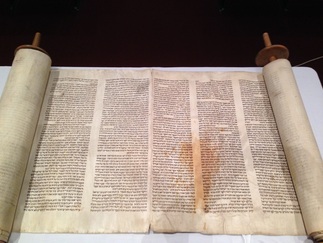
At our service tonight at Temple Beit HaYam, we rededicated the Czech Torah scroll that has been on loan to our congregation from the Memorial Scrolls Trust since 1993. Today is the 50th anniversary of the arrival of 1,564 Czech Torah scrolls — each one of them a Holocaust survivor — at Westminster Synagogue in London. Here are some of the remarks from this evening's service about the scroll, and the blessing of rededication we offered on the occasion.
According to the 1930 census, there were more than 117,000 Jews in Bohemia and Moravia, the two largest sections of what today is the Czech Republic. It is estimated that 80,000 of these Jews — nearly seven out of ten — perished in the Holocaust. In November of 1938 during a vicious pogrom, fifty synagogues in Bohemia and Moravia were attacked and most of their contents were lost. The rest were abandoned and left to decay.
Fortunately, a devout band of Czech Jews worked during the the war to gather artifacts from devastated Jewish communities and placed them in the Central Jewish Museum in Prague to save them for future generations. They worked under appalling conditions to preserve what little remained and to protect it from vandals and plunderers.
After the war, the possessions of these communities eventually fell into the hands of the Communist regime of Czechoslovakia where they were again stored in Prague and left largely unobserved and unappreciated.
In 1963, a London art dealer was offered the opportunity to purchase 1,564 of the Torah Scrolls stored in Prague. Through a process of careful negotiations with the Czechoslovakian authorities, and the timely financial support of England’s Jewish community, the scrolls were acquired and transported — on February 7, 1964, fifty years ago today — to the Westminster Synagogue in London. From there, they were sent out to synagogues and organizations across the world to give them new life.
Temple Beit HaYam acquired one of these Czech scrolls in 1993, soon after our congregation was founded. The scroll, which you see here, is on loan to our community from the Memorial Scroll Trust, the agency set up for the Czech scrolls acquired for the Westminster Synagogue in London.
Our scroll (number 1254 in the MST catalog) was originally from the town of Přeštice in Bohemia. Even today, Přeštice is a small town with no more than 7,000 inhabitants in the south western corner of the Czech Republic. In a 1930 census, there were only 99 Jews in Přeštice with 126 living in the surrounding countryside. Most of the Jews were small shop keepers. There was also a Jewish doctor, a veterinarian, a butcher, a family that owned a small liquor distillery, another owned a factory for knitwear, and another that was in the fabric dying business. Přeštice had a synagogue that was built in 1910.
In March of 1939, Bohemia and Moravia were absorbed into the Third Reich. The Jews of the entire region were gradually pushed out of public and economic life. Their businesses were confiscated and their rights denied. Beginning in November of 1941, Czech Jews were sent to the Terezin concentration camp. From there they were deported to extermination camps. Before the deportation of the Jewish community from Přeštice to Terezin, 152 documents and 212 religious items of the community were transferred to the Central Jewish Museum in Prague, including this scroll.
Since the war, there has been no return of Jewish life to Přeštice or the surrounding community. There are no Jews there today. This scroll is one of the few witnesses left of an entire Jewish community and the lives of the Jews who lived there.
Unfortunately, our Czech scroll is not considered kosher according to Jewish law. It has suffered too much damage over the years and many of the letters have become unreadable. Experienced Torah scribes have told us that it cannot be restored.
According to the 1930 census, there were more than 117,000 Jews in Bohemia and Moravia, the two largest sections of what today is the Czech Republic. It is estimated that 80,000 of these Jews — nearly seven out of ten — perished in the Holocaust. In November of 1938 during a vicious pogrom, fifty synagogues in Bohemia and Moravia were attacked and most of their contents were lost. The rest were abandoned and left to decay.
Fortunately, a devout band of Czech Jews worked during the the war to gather artifacts from devastated Jewish communities and placed them in the Central Jewish Museum in Prague to save them for future generations. They worked under appalling conditions to preserve what little remained and to protect it from vandals and plunderers.
After the war, the possessions of these communities eventually fell into the hands of the Communist regime of Czechoslovakia where they were again stored in Prague and left largely unobserved and unappreciated.
In 1963, a London art dealer was offered the opportunity to purchase 1,564 of the Torah Scrolls stored in Prague. Through a process of careful negotiations with the Czechoslovakian authorities, and the timely financial support of England’s Jewish community, the scrolls were acquired and transported — on February 7, 1964, fifty years ago today — to the Westminster Synagogue in London. From there, they were sent out to synagogues and organizations across the world to give them new life.
Temple Beit HaYam acquired one of these Czech scrolls in 1993, soon after our congregation was founded. The scroll, which you see here, is on loan to our community from the Memorial Scroll Trust, the agency set up for the Czech scrolls acquired for the Westminster Synagogue in London.
Our scroll (number 1254 in the MST catalog) was originally from the town of Přeštice in Bohemia. Even today, Přeštice is a small town with no more than 7,000 inhabitants in the south western corner of the Czech Republic. In a 1930 census, there were only 99 Jews in Přeštice with 126 living in the surrounding countryside. Most of the Jews were small shop keepers. There was also a Jewish doctor, a veterinarian, a butcher, a family that owned a small liquor distillery, another owned a factory for knitwear, and another that was in the fabric dying business. Přeštice had a synagogue that was built in 1910.
In March of 1939, Bohemia and Moravia were absorbed into the Third Reich. The Jews of the entire region were gradually pushed out of public and economic life. Their businesses were confiscated and their rights denied. Beginning in November of 1941, Czech Jews were sent to the Terezin concentration camp. From there they were deported to extermination camps. Before the deportation of the Jewish community from Přeštice to Terezin, 152 documents and 212 religious items of the community were transferred to the Central Jewish Museum in Prague, including this scroll.
Since the war, there has been no return of Jewish life to Přeštice or the surrounding community. There are no Jews there today. This scroll is one of the few witnesses left of an entire Jewish community and the lives of the Jews who lived there.
Unfortunately, our Czech scroll is not considered kosher according to Jewish law. It has suffered too much damage over the years and many of the letters have become unreadable. Experienced Torah scribes have told us that it cannot be restored.
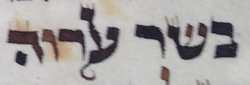
Like many of the other scrolls from Bohemia and Moravia, this scroll was written by scribes who followed a uniquely Czech Jewish mystical tradition. There are many letters in the scroll that are written with unusual features. You can see, from this week’s Torah reading (Tetzaveh), an unusually large final tzadi letter in the word Tzitz, which was the golden headband worn by Aaron, the High Priest. This column also has a very unusual letter ayin, that features a tall flag at the top and curling hook on its tail.
Because the mystical tradition that is the origin of these features was lost along with the Torah scribes who created it, scribes today are not willing to create new scrolls like this. Torah scrolls must be written with kavanah, intention, and without knowledge of the meanings of the mystical features, Torah scribes do not believe that they have the authority to create a new Czech scroll with these features. This scroll is among the last of its kind.
We will read tonight from this scroll, but without the usual blessings that can only be recited over a kosher Torah scroll. Instead, we will make the blessing for the study of Torah before we read. After the reading, we will make a special prayer to rededicate our scroll on the fiftieth anniversary of its safe arrival in London after decades of danger, abuse and neglect.
Torah Reading:
You shall make a plate (Tzitz) of pure gold and engrave upon it the inscription: “Holy to Adonai.” Place it on a cord of blue and attach it to the High Priest’s headdress. It shall be on Aaron’s forehead, so that Aaron may remove transgressions concerning the holy objects that the Israelites consecrate from their sacred donations. It shall be on his forehead at all times for Israel’s favor before Adonai. (Exodus 28:36-38)
A Prayer of Rededication:
May it be your will, Adonai our God and God of our ancestors that this sacred Torah scroll be dedicated and renewed to this holy congregation. Let it be a sign and a symbol for us of the undying connection of our people to Your Torah, even through darkness beyond our imagining.
Let this scroll stand as a memorial and witness of all the martyrs of our people — especially of the Jewish community of the city of Přeštice and the lands surrounding it. Though they were uprooted and wiped away by the greatest of evils, there is no power that can wipe them from our memories and no darkness that can keep them from Your sight.
As the Tzitz worn on the forehead of Aaron was a symbol of Your unceasing holiness and Your presence among the Israelites, may this scroll symbolize Your presence in this community. As the Tzitz wiped away all suffering and sin from the holy objects of the Tabernacle, may this scroll help us to wipe away the taint of the horror that befell our people in the consuming fire of the Shoah. Amen.
Because the mystical tradition that is the origin of these features was lost along with the Torah scribes who created it, scribes today are not willing to create new scrolls like this. Torah scrolls must be written with kavanah, intention, and without knowledge of the meanings of the mystical features, Torah scribes do not believe that they have the authority to create a new Czech scroll with these features. This scroll is among the last of its kind.
We will read tonight from this scroll, but without the usual blessings that can only be recited over a kosher Torah scroll. Instead, we will make the blessing for the study of Torah before we read. After the reading, we will make a special prayer to rededicate our scroll on the fiftieth anniversary of its safe arrival in London after decades of danger, abuse and neglect.
Torah Reading:
You shall make a plate (Tzitz) of pure gold and engrave upon it the inscription: “Holy to Adonai.” Place it on a cord of blue and attach it to the High Priest’s headdress. It shall be on Aaron’s forehead, so that Aaron may remove transgressions concerning the holy objects that the Israelites consecrate from their sacred donations. It shall be on his forehead at all times for Israel’s favor before Adonai. (Exodus 28:36-38)
A Prayer of Rededication:
May it be your will, Adonai our God and God of our ancestors that this sacred Torah scroll be dedicated and renewed to this holy congregation. Let it be a sign and a symbol for us of the undying connection of our people to Your Torah, even through darkness beyond our imagining.
Let this scroll stand as a memorial and witness of all the martyrs of our people — especially of the Jewish community of the city of Přeštice and the lands surrounding it. Though they were uprooted and wiped away by the greatest of evils, there is no power that can wipe them from our memories and no darkness that can keep them from Your sight.
As the Tzitz worn on the forehead of Aaron was a symbol of Your unceasing holiness and Your presence among the Israelites, may this scroll symbolize Your presence in this community. As the Tzitz wiped away all suffering and sin from the holy objects of the Tabernacle, may this scroll help us to wipe away the taint of the horror that befell our people in the consuming fire of the Shoah. Amen.
 RSS Feed