
This is the sermon I am giving tonight at Temple Sinai of Cranston, Rhode Island.
There are a lot of movies that depict the events of this week’s Torah portion, Shemot, so it might be the most famous portion of the entire Torah. The Ten Commandments and The Prince of Egypt tell the story of the birth of Moses, his vision of God at the Burning Bush, and his first appearance before Pharaoh commanding, “Let my people go!” Perhaps it is not surprising though that the movies do not give much attention to the fact that this week’s Torah portion is heavy with women in starring roles. In fact, Parashat Shemot may be the Torah portion in which there are more women heroes than any other part of the Torah.
To start, let’s talk about Shifra and Pu’ah. You don’t remember them from the movie? That’s because, as far as I know, there has never been a movie that depicted the two midwives who made the story of the Exodus possible. Yet, the text of the Torah makes it clear that they were indispensable heroes.
The king of Egypt spoke to the Hebrew midwives, named Shifrah and Pu’ah, and said to them, “When you help Hebrew women give birth, look at the birthstool. If it is a boy, kill him; if it is a girl, let her live.” The midwives, fearing God, did not do as the king of Egypt told them; they let the boys live. So the king summoned them and said, “Why have you let the boys live?” The midwives said to Pharaoh, “The Hebrew women are not like the Egyptians: they are vigorous. They give birth on their own before the midwife can arrive.” (Exodus 1:15-19)
The text goes on to say that Shifra and Pu’ah were rewarded by God for their act of civil disobedience. It was because of them that the Israelites continued to increase in numbers. Pharaoh’s plan to destroy them backfired because of the bravery of these women and their resistance against Pharaoh’s cruel hatred and fear of the Israelites.
But, notice also that Shifra and Pu’ah are not alone as heroes in this passage. In fact, every woman of Israel has a share in their heroism. The midwives told Pharaoh that the Israelite women were “not like the Egyptians: they are vigorous.” The verse suggests that the Egyptians themselves viewed their own women as frail and helpless. The Israelite women, by comparison, were regarded as strong and capable – a quality that allowed them to give birth to many children even while the Egyptians tried to oppress them.
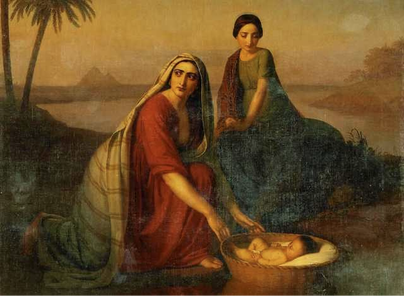
The next set of women heroes in this week’s Torah portion are an unlikely trio of co-conspirators. The Torah tells us that Yocheved, the mother of Moses, looked at her beautiful baby boy and determined that she would never allow him to be doomed by Pharaoh’s decree of death. She risked her life to save her son. She kept him hidden for three months, the longest she could dare, and then “she got a wicker basket for him and caulked it with bitumen and pitch. She put the child into it and placed it among the reeds by the bank of the Nile” (Exodus 2:3-3).
Imagine how it must have felt for Yocheved to prepare to cast away her son in order to save him. Imagine the fear and the terrible feeling of loss she must have experienced as her fingertips pushed that little basket to set it afloat upon the waters of the river, hoping that somehow her baby would be found and saved.
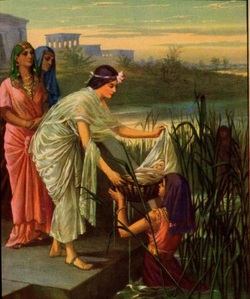
Yocheved gave her daughter, Miriam, the task of following the basket with her eyes to see what would happen to her baby brother. Miriam, the second hero of this trio, saw the baby float down to the very spot where the daughter of Pharaoh was bathing. When she saw Pharaoh’s daughter take hold of the basket, open it, gaze upon the beautiful baby boy, and realize compassionately that the baby must be the son of a Hebrew slave, Miriam had the courage to step forward to ask the princess, “Shall I go and get you a Hebrew nurse to suckle the child for you?” (Exodus 2:7).
Miriam took a great gamble on the mercy of Pharaoh’s daughter. She trusted that the princess would not reject the child when she saw that her interest in him had been witnessed by a Hebrew. She trusted that Pharaoh’s daughter would willingly enter into an agreement with slaves to allow the child to be nursed by its natural mother – for whom else could this “Hebrew Nurse” be but the child’s own mother? Miriam knew that the instinct to save the life of a child would overpower whatever instinct Pharaoh’s daughter may have had to maintain loyalty to her father, to revile all Hebrews, or just to protect herself from danger. It worked.
So Pharaoh’s daughter – who is unnamed in the biblical text – became the third woman in this trio of life. The rabbis of the Talmud gave her the name Bityah and claimed she did not go into the Nile just to take a bath, rather, she was cleansing herself from the idolatry of her father’s house – that is, she was entering the mikveh of conversion to Judaism (B. Megilah). According to the rabbis, Bityah defied the advice of her handmaidens who urged her not to go against the law of Pharaoh, her father.
These three women, Yocheved, Miriam and Pharaoh’s daughter – along with the midwives, Shifra and Pu’ah – are prominent in this week’s Torah portion that begins the book of Exodus. It cannot be a coincidence. They are the ones who make the birth and life of Moses possible. They are the ones who set the tone for the entire story of the Exodus by placing the values of life above death, by placing the values of God above the values of Pharaoh, who only pretended to be a god. When Pharaoh decreed that all the Hebrew boys should be drowned in the waters of the Nile, they took Moses from the waters of childbirth and then, literally, lifted him up and out of the waters of the Nile for a figurative second birth.
The redemption of Israel from Egypt had to begin with an act of birthing by many mothers. The story of the Exodus is not just a story about slavery transformed into freedom; it is a story of affirming the power to give life as a way to transcend death. It is a story about the dignity, hope, courage, strength and life-giving qualities of women.
Today, we are living in a moment of awakening social recognition of women’s lives, women’s dignity, women’s hope, courage, strength, and life. After years in which our society turned a blind eye to sexual aggression, harassment, and debasement of women, we are finally reaching a moment when women are being believed when they say that they have been treated cruelly by men who saw their bodies as little more than objects to fulfill their desires and exercise their power.
Parashat Shemot comes to us this year in a way that should sound and feel differently to us than it has come in years past. This year, we are reminded that women cannot be ignored. Their story is where the human story begins. They are models of the courage it takes to affirm life and light even from the shadow of death and darkness. Even the highly patriarchal society from which the Hebrew Bible emerged, presented these women as heroes. Moses could not even have had a single moment of bravery standing before Pharaoh, were it not for the bravery of the women who collectively brought him into the world, protected him, saved him, nourished him and raised him at great risk.
So, when women read this week’s Torah portion, they can truly say, “Me, too.” They can say, “My story as a woman is an essential part of Torah.” They can say, “The women, like me, of the Bible are just as much responsible for the Jewish people’s relationship with God as any man.”
Even more than that, they can say, “The values of the Torah that demand justice and righteousness also apply to me as a woman.” Equal pay for women for equal work is part of the values of Torah. Dignity and respect for women’s bodies is just as much a part of our Torah as the dignity and respect due to any human being. The obligation to hear, to believe, and to stand up for the cause of the oppressed belongs to women as much as it belongs to anyone else.
For hundreds of years, Jewish tradition identified the obligation to study Torah primarily as an obligation upon men. That certainly has changed a great deal in the last century as women scholars of Torah have gained recognition and standing in the Jewish community. But the obligation upon men should now be understood in a new way. We as men have an obligation to apply the Torah to the way that we perceive, listen to, respect, and extend justice to women. After all, the problem of sexual harassment and unequal treatment of women is primarily a male problem. It is a problem of the way that men see women and the way that men treat women. To be Torah-true Jews of the 21st century, we men must strive to notice the women of our past in our sacred texts and, even more, we must strive to notice, respect and treat with dignity the women of our present and of our future.
Shabbat shalom.
There are a lot of movies that depict the events of this week’s Torah portion, Shemot, so it might be the most famous portion of the entire Torah. The Ten Commandments and The Prince of Egypt tell the story of the birth of Moses, his vision of God at the Burning Bush, and his first appearance before Pharaoh commanding, “Let my people go!” Perhaps it is not surprising though that the movies do not give much attention to the fact that this week’s Torah portion is heavy with women in starring roles. In fact, Parashat Shemot may be the Torah portion in which there are more women heroes than any other part of the Torah.
To start, let’s talk about Shifra and Pu’ah. You don’t remember them from the movie? That’s because, as far as I know, there has never been a movie that depicted the two midwives who made the story of the Exodus possible. Yet, the text of the Torah makes it clear that they were indispensable heroes.
The king of Egypt spoke to the Hebrew midwives, named Shifrah and Pu’ah, and said to them, “When you help Hebrew women give birth, look at the birthstool. If it is a boy, kill him; if it is a girl, let her live.” The midwives, fearing God, did not do as the king of Egypt told them; they let the boys live. So the king summoned them and said, “Why have you let the boys live?” The midwives said to Pharaoh, “The Hebrew women are not like the Egyptians: they are vigorous. They give birth on their own before the midwife can arrive.” (Exodus 1:15-19)
The text goes on to say that Shifra and Pu’ah were rewarded by God for their act of civil disobedience. It was because of them that the Israelites continued to increase in numbers. Pharaoh’s plan to destroy them backfired because of the bravery of these women and their resistance against Pharaoh’s cruel hatred and fear of the Israelites.
But, notice also that Shifra and Pu’ah are not alone as heroes in this passage. In fact, every woman of Israel has a share in their heroism. The midwives told Pharaoh that the Israelite women were “not like the Egyptians: they are vigorous.” The verse suggests that the Egyptians themselves viewed their own women as frail and helpless. The Israelite women, by comparison, were regarded as strong and capable – a quality that allowed them to give birth to many children even while the Egyptians tried to oppress them.
The next set of women heroes in this week’s Torah portion are an unlikely trio of co-conspirators. The Torah tells us that Yocheved, the mother of Moses, looked at her beautiful baby boy and determined that she would never allow him to be doomed by Pharaoh’s decree of death. She risked her life to save her son. She kept him hidden for three months, the longest she could dare, and then “she got a wicker basket for him and caulked it with bitumen and pitch. She put the child into it and placed it among the reeds by the bank of the Nile” (Exodus 2:3-3).
Imagine how it must have felt for Yocheved to prepare to cast away her son in order to save him. Imagine the fear and the terrible feeling of loss she must have experienced as her fingertips pushed that little basket to set it afloat upon the waters of the river, hoping that somehow her baby would be found and saved.
Yocheved gave her daughter, Miriam, the task of following the basket with her eyes to see what would happen to her baby brother. Miriam, the second hero of this trio, saw the baby float down to the very spot where the daughter of Pharaoh was bathing. When she saw Pharaoh’s daughter take hold of the basket, open it, gaze upon the beautiful baby boy, and realize compassionately that the baby must be the son of a Hebrew slave, Miriam had the courage to step forward to ask the princess, “Shall I go and get you a Hebrew nurse to suckle the child for you?” (Exodus 2:7).
Miriam took a great gamble on the mercy of Pharaoh’s daughter. She trusted that the princess would not reject the child when she saw that her interest in him had been witnessed by a Hebrew. She trusted that Pharaoh’s daughter would willingly enter into an agreement with slaves to allow the child to be nursed by its natural mother – for whom else could this “Hebrew Nurse” be but the child’s own mother? Miriam knew that the instinct to save the life of a child would overpower whatever instinct Pharaoh’s daughter may have had to maintain loyalty to her father, to revile all Hebrews, or just to protect herself from danger. It worked.
So Pharaoh’s daughter – who is unnamed in the biblical text – became the third woman in this trio of life. The rabbis of the Talmud gave her the name Bityah and claimed she did not go into the Nile just to take a bath, rather, she was cleansing herself from the idolatry of her father’s house – that is, she was entering the mikveh of conversion to Judaism (B. Megilah). According to the rabbis, Bityah defied the advice of her handmaidens who urged her not to go against the law of Pharaoh, her father.
These three women, Yocheved, Miriam and Pharaoh’s daughter – along with the midwives, Shifra and Pu’ah – are prominent in this week’s Torah portion that begins the book of Exodus. It cannot be a coincidence. They are the ones who make the birth and life of Moses possible. They are the ones who set the tone for the entire story of the Exodus by placing the values of life above death, by placing the values of God above the values of Pharaoh, who only pretended to be a god. When Pharaoh decreed that all the Hebrew boys should be drowned in the waters of the Nile, they took Moses from the waters of childbirth and then, literally, lifted him up and out of the waters of the Nile for a figurative second birth.
The redemption of Israel from Egypt had to begin with an act of birthing by many mothers. The story of the Exodus is not just a story about slavery transformed into freedom; it is a story of affirming the power to give life as a way to transcend death. It is a story about the dignity, hope, courage, strength and life-giving qualities of women.
Today, we are living in a moment of awakening social recognition of women’s lives, women’s dignity, women’s hope, courage, strength, and life. After years in which our society turned a blind eye to sexual aggression, harassment, and debasement of women, we are finally reaching a moment when women are being believed when they say that they have been treated cruelly by men who saw their bodies as little more than objects to fulfill their desires and exercise their power.
Parashat Shemot comes to us this year in a way that should sound and feel differently to us than it has come in years past. This year, we are reminded that women cannot be ignored. Their story is where the human story begins. They are models of the courage it takes to affirm life and light even from the shadow of death and darkness. Even the highly patriarchal society from which the Hebrew Bible emerged, presented these women as heroes. Moses could not even have had a single moment of bravery standing before Pharaoh, were it not for the bravery of the women who collectively brought him into the world, protected him, saved him, nourished him and raised him at great risk.
So, when women read this week’s Torah portion, they can truly say, “Me, too.” They can say, “My story as a woman is an essential part of Torah.” They can say, “The women, like me, of the Bible are just as much responsible for the Jewish people’s relationship with God as any man.”
Even more than that, they can say, “The values of the Torah that demand justice and righteousness also apply to me as a woman.” Equal pay for women for equal work is part of the values of Torah. Dignity and respect for women’s bodies is just as much a part of our Torah as the dignity and respect due to any human being. The obligation to hear, to believe, and to stand up for the cause of the oppressed belongs to women as much as it belongs to anyone else.
For hundreds of years, Jewish tradition identified the obligation to study Torah primarily as an obligation upon men. That certainly has changed a great deal in the last century as women scholars of Torah have gained recognition and standing in the Jewish community. But the obligation upon men should now be understood in a new way. We as men have an obligation to apply the Torah to the way that we perceive, listen to, respect, and extend justice to women. After all, the problem of sexual harassment and unequal treatment of women is primarily a male problem. It is a problem of the way that men see women and the way that men treat women. To be Torah-true Jews of the 21st century, we men must strive to notice the women of our past in our sacred texts and, even more, we must strive to notice, respect and treat with dignity the women of our present and of our future.
Shabbat shalom.
 RSS Feed