
This is the sermon I delivered at Temple Sinai in Cranston, Rhode Island on the first day of Rosh Hashanah 5783, September 26, 2022.
There is a moment in the Book of Esther that always stops me dead in my tracks. Every Purim, I cannot read it without pausing and wondering. It comes right after Haman (thank you for not making the noise) is infuriated by Mordechai’s failure to bow down to him and he decides that the Jews must be destroyed. He goes to the King and says, “There is a certain people, scattered and dispersed among the other peoples in all the provinces of your realm, whose laws are different from those of any other people and who do not obey the king’s laws; and it is not in your Majesty’s interest to tolerate them” (Esther 3:8).
In one verse, the Hebrew Bible sums up two thousand years of antisemitism. So, the question I always ask myself on hearing this verse is, “How on earth did they know?”
How did the authors of the book of Esther know that, for centuries to come, the Jewish people would be maligned as a scattered, insidious force working to destroy civilization? How did they know that we would be slandered and persecuted for the invented crime of disloyalty to the nations in which we live? How did they guess that villain after villain, like Haman, would rise against us seeking our destruction, all while applauding themselves for their self-righteousness? How did they know?
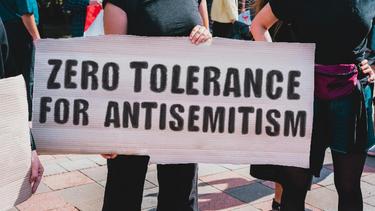
Let me assure you that I do not make this observation as some kind of proof of the divine origin or the inerrancy of the Hebrew Bible. I’ll leave that to the biblical literalists and fundamentalists – I’m not one of those. But I do make the observation to make a point about the antiquity and persistence of antisemitism. It is, perhaps, the world’s oldest form of hatred, and it is still very much with us today.
Consider these examples:
• At the University of Vermont last year, a teaching assistant made antisemitic remarks on social media threatening to lower the grades of Jewish students. Two student organizations, including a sexual assault support group, boasted that they would exclude students who “expressed support for Zionism” from membership in their organizations. UVM’s President released a statement two weeks ago denying that antisemitism is an issue at the university.
• In Kentucky, the Bracken County Republican Party put a message on its Facebook page accusing the newly confirmed director of the Bureau of Alcohol, Tobacco and Firearms of being part of "a Jewish junta” that “is getting stronger and more aggressive." As at UVM, the county’s party board denied charges of antisemitism with the claim that they would never do that because they have party members with Jewish heritage.
• In Boston, a Democratic City Council member tweeted, “Y’all are letting the Zionists SHAKE YOU DOWN” in response to a federal court ruling that allowed a new law against boycotting Israel to go into effect.
• Right here in Cranston, flyers with hateful antisemitic messages were distributed by a white supremacist organization. Two men with the flyers were arrested in East Providence for refusing to identify themselves to police who witnessed them illegally posting them on utility poles.
We don’t only have anecdotes to show that antisemitism is on the rise. According to a report by the Anti-Defamation League, last year saw a 27-percent year-over-year increase in anti-Semitic messaging from white supremacist groups. The World Zionist Organization reports that it was the worst year in a decade for antisemitic incidents around the globe.
What is going on? What has been going on for the last 2000 years? Lies against the Jews are practically the same today as they were in ancient Persia when the biblical Haman talked about Jews as an insidious affliction, bent on destroying a decent, law-abiding society – an affliction that could only be stopped by force.
And why is it that the Jews, of all people, have been singled out for this kind of suspicion, animosity and hatred? Scholars have puzzled over it for centuries. You, too, have probably wondered, “Why us? Why the Jews?” Of all the nations and peoples of the earth, why have we been singled out by those who wish to find a scapegoat for humanity’s ills?
You have probably heard some of the theories: Jews were stigmatized by Christianity with the charge that we were responsible for the death of Jesus. But if that is the root source of the hatred, why is antisemitism also so prevalent among Muslims and other non-Christians?
Jews have been stereotyped as money-grubbing exploiters of the poor. But if that is the reason for antisemitism, why has the persecution of Jews actually been at its worst when Jews have been desperately poor and exploited themselves, as we have been for most of our history?
Jews revere a singular God of universal morality, and that has been perceived as an intolerable threat to those who revere only their own power. But if that is the source of antisemitism, why are other minority religions that also uphold a moral deity not also singled out for hatred?
Some people today claim that the State of Israel is the reason for the rise of antisemitism. The Israeli-Palestinian conflict is complicated, and I have no intention of doing it justice this morning. But I do note that nothing Israel does actually reduces anti-Jewish hatred. If Israel today pulled out of the West Bank and declared a Palestinian state, does anyone seriously believe that anti-Jewish rhetoric would be reduced? Is that what happened 18 years ago when Israel unilaterally pulled out of Gaza? No. If anything, it has gotten worse, with increasing claims that the Jewish people are actually colonialist invaders in the Land of Israel – the only people in the world who are called colonialists for living in their native land.
The truth of the reason for antisemitism’s persistence may be the sum of all of these factors and more – a perfect storm of prejudices. Maybe. But I want to suggest a different interpretation – the interpretation expressed by Professor Deborah Lipstadt, the American historian best known for documenting the deliberate falsification of history by Holocaust deniers.
Lipstadt’s observation is so simple – and also so contemporary – that it is surprising that we fail to recognize it immediately. Antisemitism is a conspiracy theory – an unlikely or bizarre explanation of events that depends on belief in sinister, powerful groups. Conspiracy theories gain traction, not because of evidence or arguments, but because of the desire to blame circumstances on a hated group that is defined as evil.
In the middle ages Jews were accused of killing gentile babies to drink their blood. Today, antisemites spread stories of a Jewish conspiracy to replace the white race by promoting the immigration of black and brown people into the United States. They tell stories of Jews not showing up to work at the World Trade Center on September 11, 2001, which “proves” that the attack was secretly a Jewish plot.
When we actual inspect the underlying beliefs of antisemitism, all we see is delusional thinking. We see beliefs so absurd and without a shred of evidence that could only be the product of hatred and imagined terrors run amok. We easily understand that such conspiracy theories are the product of paranoia and irrational rage. They have nothing to do with history, theology, socio-economic or geopolitical trends, policies or facts. Conspiracy theories do not need reasons. Hatred has no logic.
The unsettling idea that there is no “why” behind antisemitism presents a big problem for people who want to combat it. If there is no rational basis for antisemitism, there is no reason to believe that any amount of facts or arguments will undo it. Antisemites believe that Jews are greedy, evil, inferior, or plotting to overthrow civilization because that is what they believe. They may present so-called evidence in support of their beliefs, but debunking false evidence does not stop them from hating since their hatred was never actually based in facts or evidence to begin with.
Does this all sound familiar? In many ways, we are living in an era of conspiracy theories. Bizarre, ugly lies are rampant today and readily believed by the gullible – about faked school shootings, about the origin of the Covid virus, and, yes, about stolen elections, too.
So, what do we do? How do you stop a hatred that is based on nothing?
We have to admit that the answer cannot just be the main thing we have tried so far – education. The movie, Schindler’s List broke a record when it was shown on television unedited and without commercial interruption in 1997. Sixty-five million people watched it, by far the largest audience of any non-sports TV program that year. People were moved to tears. It was the most compelling piece of public Holocaust education ever conceived. In the wake of it, mandatory Holocaust education programs were enacted across the country, including here in Rhode Island.
And what has it gained us? Twenty-four years after Schindler’s List was shown on NBC, white supremacists marched down the streets of Charlottesville, Virginia, chanting, “Jews will not replace us.”
At one time, we might have been convinced that the worst of antisemitism was just among fringy whackos on the edge of society. Not any more. The stories about the World Trade Center and “White Replacement Theory” are not confined to corners of the dark web. They are now mainstream. They are promoted by commentators on cable news and by college professors at distinguished universities. Antisemitism is spreading.
So, what does work? In my mind, there are several important steps to combatting hatred beyond just general public education. Here are four:
1) Speak Up. No antisemitism should ever be ignored or go unchallenged. When a neighbor makes an offhand semi-humorous remark about Jews controlling Hollywood, or the banking system, or what have you – reply without apology or antagonism, “That’s hurtful. You know, some people believe those awful stereotypes. Don’t tell jokes like that.”
When a small, pathetic group of neo-Nazis posts antisemitic flyers in Cranston or anywhere, we won’t write it off as the product of a few disturbed individuals. We will report it to the police. We will go to the newspapers and demand coverage. We will publicize the names and faces of the perpetrators of hate. If people tell us we are “overreacting,” we will say that we will not be silenced and that all forms of hatred must be confronted. Antisemitism counts as hatred just as much as racism, sexism and homophobia.
2) We must educate ourselves. Maybe in our attempts to educate non-Jews we forgot to make sure that we ourselves understand antisemitism. Learning about the history and patterns of antisemitism will help Jews to identify it quickly and make sure that other people see it, too, even in our everyday interactions. I’ll be teaching an adult education class this year on antisemitism and we will discuss it in age-appropriate ways in our Religious School, too.
3) Join forces. Antisemitism may be the oldest hatred, but it’s not the only one. When we join with Blacks, Muslims, Asian and Pacific Islander peoples, LGBTQIA people and others who are also subjected to hatred, we not only gain allies in our fight, we also gain opportunities to show how the antisemitism we face is painful and harmful to us, and how it hurts them, too. We show that antisemitism is not just some relic from the past. It is here and it is now.
A recent report in the New York Times showed that antisemitic propagandists have been working overtime posting messages on fake social media accounts designed to drive wedges of distrust between Jews and Blacks, and Jews and Muslims. We can’t be distracted or tricked out of building alliances with other victims of hatred. This is the thinking behind Temple Sinai’s Community Conversations program with a Black church in Providence and our Building Bridges program of dialogue with Rhode Island Muslims. I encourage you to participate with us.
4) and finally, we must dig more deeply into ourselves. Jews are not exempt from our own prejudices and stereotyping. Our reflections on the experience of antisemitism should not wall us off from the suffering of others people, it should heighten our awareness. We should become more determined to acknowledge prejudice and bias that exists within the Jewish community. We need to notice our own tendencies to marginalize Jews of Color, transgender Jews, and queer Jews. We should strengthen our resolve to build a community in which every voice matters. We know that such a commitment will make us better and stronger as people.
The book of Esther, for twenty-three hundred years, has been our warning about what can happen when evil people use conspiracy theories and malevolent lies to gain power. In many ways, we are seeing a repeat of that lesson in America today. It is no wonder that the oldest conspiracy theory of them all is also on the rise at a time like this. Working against the spread of lies is not only important for us as Jews, it is also essential to the stability of our society as a whole.
This year, in 5783, be an Esther, be a Mordechai by taking action, educate yourself, build alliances, and dig deeply into yourself. Make a difference in the face of rising hatred by proudly being a Jew and fighting for our values.
L’shanah tovah tikateivu. May you be inscribed for a good year.
There is a moment in the Book of Esther that always stops me dead in my tracks. Every Purim, I cannot read it without pausing and wondering. It comes right after Haman (thank you for not making the noise) is infuriated by Mordechai’s failure to bow down to him and he decides that the Jews must be destroyed. He goes to the King and says, “There is a certain people, scattered and dispersed among the other peoples in all the provinces of your realm, whose laws are different from those of any other people and who do not obey the king’s laws; and it is not in your Majesty’s interest to tolerate them” (Esther 3:8).
In one verse, the Hebrew Bible sums up two thousand years of antisemitism. So, the question I always ask myself on hearing this verse is, “How on earth did they know?”
How did the authors of the book of Esther know that, for centuries to come, the Jewish people would be maligned as a scattered, insidious force working to destroy civilization? How did they know that we would be slandered and persecuted for the invented crime of disloyalty to the nations in which we live? How did they guess that villain after villain, like Haman, would rise against us seeking our destruction, all while applauding themselves for their self-righteousness? How did they know?
Let me assure you that I do not make this observation as some kind of proof of the divine origin or the inerrancy of the Hebrew Bible. I’ll leave that to the biblical literalists and fundamentalists – I’m not one of those. But I do make the observation to make a point about the antiquity and persistence of antisemitism. It is, perhaps, the world’s oldest form of hatred, and it is still very much with us today.
Consider these examples:
• At the University of Vermont last year, a teaching assistant made antisemitic remarks on social media threatening to lower the grades of Jewish students. Two student organizations, including a sexual assault support group, boasted that they would exclude students who “expressed support for Zionism” from membership in their organizations. UVM’s President released a statement two weeks ago denying that antisemitism is an issue at the university.
• In Kentucky, the Bracken County Republican Party put a message on its Facebook page accusing the newly confirmed director of the Bureau of Alcohol, Tobacco and Firearms of being part of "a Jewish junta” that “is getting stronger and more aggressive." As at UVM, the county’s party board denied charges of antisemitism with the claim that they would never do that because they have party members with Jewish heritage.
• In Boston, a Democratic City Council member tweeted, “Y’all are letting the Zionists SHAKE YOU DOWN” in response to a federal court ruling that allowed a new law against boycotting Israel to go into effect.
• Right here in Cranston, flyers with hateful antisemitic messages were distributed by a white supremacist organization. Two men with the flyers were arrested in East Providence for refusing to identify themselves to police who witnessed them illegally posting them on utility poles.
We don’t only have anecdotes to show that antisemitism is on the rise. According to a report by the Anti-Defamation League, last year saw a 27-percent year-over-year increase in anti-Semitic messaging from white supremacist groups. The World Zionist Organization reports that it was the worst year in a decade for antisemitic incidents around the globe.
What is going on? What has been going on for the last 2000 years? Lies against the Jews are practically the same today as they were in ancient Persia when the biblical Haman talked about Jews as an insidious affliction, bent on destroying a decent, law-abiding society – an affliction that could only be stopped by force.
And why is it that the Jews, of all people, have been singled out for this kind of suspicion, animosity and hatred? Scholars have puzzled over it for centuries. You, too, have probably wondered, “Why us? Why the Jews?” Of all the nations and peoples of the earth, why have we been singled out by those who wish to find a scapegoat for humanity’s ills?
You have probably heard some of the theories: Jews were stigmatized by Christianity with the charge that we were responsible for the death of Jesus. But if that is the root source of the hatred, why is antisemitism also so prevalent among Muslims and other non-Christians?
Jews have been stereotyped as money-grubbing exploiters of the poor. But if that is the reason for antisemitism, why has the persecution of Jews actually been at its worst when Jews have been desperately poor and exploited themselves, as we have been for most of our history?
Jews revere a singular God of universal morality, and that has been perceived as an intolerable threat to those who revere only their own power. But if that is the source of antisemitism, why are other minority religions that also uphold a moral deity not also singled out for hatred?
Some people today claim that the State of Israel is the reason for the rise of antisemitism. The Israeli-Palestinian conflict is complicated, and I have no intention of doing it justice this morning. But I do note that nothing Israel does actually reduces anti-Jewish hatred. If Israel today pulled out of the West Bank and declared a Palestinian state, does anyone seriously believe that anti-Jewish rhetoric would be reduced? Is that what happened 18 years ago when Israel unilaterally pulled out of Gaza? No. If anything, it has gotten worse, with increasing claims that the Jewish people are actually colonialist invaders in the Land of Israel – the only people in the world who are called colonialists for living in their native land.
The truth of the reason for antisemitism’s persistence may be the sum of all of these factors and more – a perfect storm of prejudices. Maybe. But I want to suggest a different interpretation – the interpretation expressed by Professor Deborah Lipstadt, the American historian best known for documenting the deliberate falsification of history by Holocaust deniers.
Lipstadt’s observation is so simple – and also so contemporary – that it is surprising that we fail to recognize it immediately. Antisemitism is a conspiracy theory – an unlikely or bizarre explanation of events that depends on belief in sinister, powerful groups. Conspiracy theories gain traction, not because of evidence or arguments, but because of the desire to blame circumstances on a hated group that is defined as evil.
In the middle ages Jews were accused of killing gentile babies to drink their blood. Today, antisemites spread stories of a Jewish conspiracy to replace the white race by promoting the immigration of black and brown people into the United States. They tell stories of Jews not showing up to work at the World Trade Center on September 11, 2001, which “proves” that the attack was secretly a Jewish plot.
When we actual inspect the underlying beliefs of antisemitism, all we see is delusional thinking. We see beliefs so absurd and without a shred of evidence that could only be the product of hatred and imagined terrors run amok. We easily understand that such conspiracy theories are the product of paranoia and irrational rage. They have nothing to do with history, theology, socio-economic or geopolitical trends, policies or facts. Conspiracy theories do not need reasons. Hatred has no logic.
The unsettling idea that there is no “why” behind antisemitism presents a big problem for people who want to combat it. If there is no rational basis for antisemitism, there is no reason to believe that any amount of facts or arguments will undo it. Antisemites believe that Jews are greedy, evil, inferior, or plotting to overthrow civilization because that is what they believe. They may present so-called evidence in support of their beliefs, but debunking false evidence does not stop them from hating since their hatred was never actually based in facts or evidence to begin with.
Does this all sound familiar? In many ways, we are living in an era of conspiracy theories. Bizarre, ugly lies are rampant today and readily believed by the gullible – about faked school shootings, about the origin of the Covid virus, and, yes, about stolen elections, too.
So, what do we do? How do you stop a hatred that is based on nothing?
We have to admit that the answer cannot just be the main thing we have tried so far – education. The movie, Schindler’s List broke a record when it was shown on television unedited and without commercial interruption in 1997. Sixty-five million people watched it, by far the largest audience of any non-sports TV program that year. People were moved to tears. It was the most compelling piece of public Holocaust education ever conceived. In the wake of it, mandatory Holocaust education programs were enacted across the country, including here in Rhode Island.
And what has it gained us? Twenty-four years after Schindler’s List was shown on NBC, white supremacists marched down the streets of Charlottesville, Virginia, chanting, “Jews will not replace us.”
At one time, we might have been convinced that the worst of antisemitism was just among fringy whackos on the edge of society. Not any more. The stories about the World Trade Center and “White Replacement Theory” are not confined to corners of the dark web. They are now mainstream. They are promoted by commentators on cable news and by college professors at distinguished universities. Antisemitism is spreading.
So, what does work? In my mind, there are several important steps to combatting hatred beyond just general public education. Here are four:
1) Speak Up. No antisemitism should ever be ignored or go unchallenged. When a neighbor makes an offhand semi-humorous remark about Jews controlling Hollywood, or the banking system, or what have you – reply without apology or antagonism, “That’s hurtful. You know, some people believe those awful stereotypes. Don’t tell jokes like that.”
When a small, pathetic group of neo-Nazis posts antisemitic flyers in Cranston or anywhere, we won’t write it off as the product of a few disturbed individuals. We will report it to the police. We will go to the newspapers and demand coverage. We will publicize the names and faces of the perpetrators of hate. If people tell us we are “overreacting,” we will say that we will not be silenced and that all forms of hatred must be confronted. Antisemitism counts as hatred just as much as racism, sexism and homophobia.
2) We must educate ourselves. Maybe in our attempts to educate non-Jews we forgot to make sure that we ourselves understand antisemitism. Learning about the history and patterns of antisemitism will help Jews to identify it quickly and make sure that other people see it, too, even in our everyday interactions. I’ll be teaching an adult education class this year on antisemitism and we will discuss it in age-appropriate ways in our Religious School, too.
3) Join forces. Antisemitism may be the oldest hatred, but it’s not the only one. When we join with Blacks, Muslims, Asian and Pacific Islander peoples, LGBTQIA people and others who are also subjected to hatred, we not only gain allies in our fight, we also gain opportunities to show how the antisemitism we face is painful and harmful to us, and how it hurts them, too. We show that antisemitism is not just some relic from the past. It is here and it is now.
A recent report in the New York Times showed that antisemitic propagandists have been working overtime posting messages on fake social media accounts designed to drive wedges of distrust between Jews and Blacks, and Jews and Muslims. We can’t be distracted or tricked out of building alliances with other victims of hatred. This is the thinking behind Temple Sinai’s Community Conversations program with a Black church in Providence and our Building Bridges program of dialogue with Rhode Island Muslims. I encourage you to participate with us.
4) and finally, we must dig more deeply into ourselves. Jews are not exempt from our own prejudices and stereotyping. Our reflections on the experience of antisemitism should not wall us off from the suffering of others people, it should heighten our awareness. We should become more determined to acknowledge prejudice and bias that exists within the Jewish community. We need to notice our own tendencies to marginalize Jews of Color, transgender Jews, and queer Jews. We should strengthen our resolve to build a community in which every voice matters. We know that such a commitment will make us better and stronger as people.
The book of Esther, for twenty-three hundred years, has been our warning about what can happen when evil people use conspiracy theories and malevolent lies to gain power. In many ways, we are seeing a repeat of that lesson in America today. It is no wonder that the oldest conspiracy theory of them all is also on the rise at a time like this. Working against the spread of lies is not only important for us as Jews, it is also essential to the stability of our society as a whole.
This year, in 5783, be an Esther, be a Mordechai by taking action, educate yourself, build alliances, and dig deeply into yourself. Make a difference in the face of rising hatred by proudly being a Jew and fighting for our values.
L’shanah tovah tikateivu. May you be inscribed for a good year.











 RSS Feed