
This is the sermon I am delivering tonight at Temple Sinai in Cranston, Rhode Island.
I don’t know too many people who live with the feeling that God is right there, standing behind them, all the time. I don’t know many people who would say that they spend their days imbued with the awareness of God’s presence in their lives. I am envious of such people and, I have to admit, a little bit suspicious of them, too. God’s presence, for me, is something that I can find when I focus my attention on it, and it is something that sometimes barges into my life at unexpected moments. I think that’s the way that most people experience God – at moments when our hearts are opened to God, and at moments when we least expect God.
This week’s Torah portion, Vayeshev, begins the story of Joseph, the eleventh of Jacob’s twelve sons. In the whole Joseph saga, which we will be reading for the next four weeks in the Torah, God is famously absent. Throughout the Joseph story, people talk about God and they pray to God, but God does not appear directly and none of the characters – not even Joseph – ever communicates with God. It is as if, at the end of the book of Genesis, God has stepped into the background and let the human beings take control of the story.
Except that, here and there in the Joseph story, there are moments when God’s presence is hinted at. Quietly and unexpectedly, God shows up in obscure ways throughout the story. Here is an example from this week’s Torah portion:
“One time, when [Joseph’s] brothers had gone to pasture their father’s flock at Shechem, [Jacob] said to Joseph, ‘Your brothers are pasturing at Shechem. Come, I will send you to them.’ [Joseph] answered, ‘I am ready.’ And [Jacob] said to him, ‘Go and see how your brothers are and how the flocks are faring, and bring me back word.’ …When [Joseph] reached Shechem, a man came upon him wandering in the fields. The man asked him, ‘What are you looking for?’ He answered, ‘I am looking for my brothers. Could you tell me where they are pasturing?’ The man said, ‘They have gone from here, for I heard them say: Let us go to Dotan.’ So Joseph followed his brothers and found them at Dotan. They saw him from afar, and before he came close to them they conspired to kill him. They said to one another, ‘Here comes that dreamer!’” (Genesis 37:12-20)
Now, if you are familiar with the story, you will recognize that this is a critical moment in the plot of the entire Torah. The brothers, who are furious with Joseph, will throw Joseph into a pit and then decide to sell him into slavery. Joseph will be taken down to Egypt where he will be the trusted servant of a powerful member of Pharaoh's court, but then he will be thrown into prison when he is falsely accused of raping the courtier's wife. After that, because of his gift for interpreting dreams, Joseph will rise from his prison cell and become the second-in-command of all Egypt, and, yada-yada-yada, he will end up saving his entire family and preserving the future of the Jewish people. All of that happens in this week's Torah portion and the portions that follow, but, first, Joseph has to be able to find where his brothers are grazing those sheep.
Do you notice something odd about how he gets there? The Torah tells us that there was a man – we’re not told his name, or anything else about him – who sees Joseph wandering aimlessly in the fields and he asks Joseph if he needs some help. Joseph tells the man, “I’m looking for my brothers. Could you tell me where they are pasturing?”
How on earth would this man know? If you went up to a perfect stranger at Providence Place and said, “Excuse me, I seem to have lost my brothers. Could you tell me where they are?” what kind of response do you think you’d get? A few odd looks and a few curt replies? “Hey, buddy, how the heck should I know?” You might get someone to take pity on you and ask you where you last saw them, or what they look like. You might even get someone to you ask the question, “Who are you?” But the man in Shechem, the nameless man in the story, does not do any of those things. He just says, in effect, “They went that-a-way.”
Why is this detail even in the story? How does the reader benefit from the interlude of Joseph being lost in a field and needing the help of a nameless person who tells him where to find his brothers and how to get on with his life? I think it’s one of those moments. It’s like one of those moments in life when we are searching for something – maybe we don’t even know what it is we are searching for – and a presence appears to us and helps us find the right path – the path that is waiting for us to fulfill. Maybe it’s God’s presence popping up in Joseph’s life at a moment when he really needs to feel it, or a moment that takes him utterly by surprise.
Have you had an experience like that in your life? Take a moment now to remember the time when God’s presence came to you in some unexpected form, to help you when you needed help, or came to you when you least expected it. Got it? Good.
This week’s Torah portion, which kicks off the Joseph story, is read every year during, or (as this year) right before, Chanukah. I find the this story about God’s hidden presence to be a perfect fit for Chanukah.
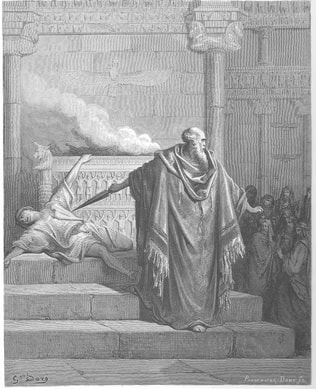
Think about it. Who is the hero of Chanukah? If you ask most students in our Religious School, they will tell you immediately who they think it is. They will say that it was Mattathias, the brave priest of Modi’in who refused to offer a sacrifice to the Greek gods after he was ordered to do so. Or, they will say that it was Judah Maccabee, the son of Mattathias, who led the rebellion against the Seleucid Empire and drove the Greeks out of the Temple. Or, maybe, they will say that it was whoever found that cruse of oil that was used to light the Temple Menorah – the oil that was only expected to last one day, but lasted eight.
The rabbis of the Talmud knew this about the Chanukah story. They knew that it was a story that seems to point to a human hero, and that made them uncomfortable. For that reason, they assigned a haftarah portion for the Shabbat that falls during Chanukah that says, pointedly, “‘Not by might, and not by power, but by My spirit,’ says Adonai Tz’vaot!” (Zechariah 4:6). They wanted to make sure that everyone understood that God was the real hero of the Chanukah story.
But I won’t correct the student who says that the hero was Mattathias or Judah Maccabee, or even the person who found the oil. Those answers are all correct, too. When we feel God’s presence in our lives, God doesn’t do it alone. It is always people – human beings – who serve as God’s eyes, God’s ears, and God’s hands in making miracles happen.
Remember that moment when you felt God’s presence come to you when you needed help? In what form to God appear? Who served at that moment as God’s eyes, ears, and hands? Who was the unnamed stranger, or the intimate friend, who gave you what you needed to fulfill your destiny at that very moment?
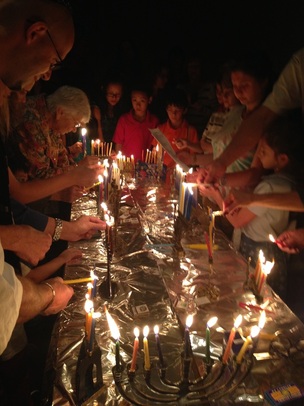
Chanukah is a holiday of noticing miracles and noticing the way that they are sometimes hidden and unexpected. God does not always enter into our lives as the gigantic special effects moment of the parting of the sea. More often, God comes as softly flickering lights in the darkness that help us remember who we are and where we are going.
You know, there is a song we sing during Chanukah that goes like this:
“Who can retell the things that befell us? Who can count them? In every age a hero or sage came to our aid!”
Who is the hero of that song? Who is the song talking about when it praises heroes and sages?
The opening line of the song is actually a paraphrase of a Psalm. It’s Psalm 116, which opens:
Mi yimalel g'vurot Adonai, yashmia kol t'hilato!
Who can retell the mighty acts of Adonai, proclaim all God’s praises!
Even when we sing our songs, just as in this week’s Torah portion, we sometimes let God’s presence step into the background. We sometimes let the human beings take control of the story. That is as it should be. We need to live our lives as if our fate is in our own hands. We need to take responsibility. We need to learn to be the heroes of our own lives.
But we also need to remember, once in a while when we really need it, or when it comes crashing down upon us in a moment of crisis, that there is a Presence ready to help us. We need to notice the quiet and unnamed character at the edges of our story, guiding us, loving us, bringing light into our darkness.
Shabbat shalom.
I don’t know too many people who live with the feeling that God is right there, standing behind them, all the time. I don’t know many people who would say that they spend their days imbued with the awareness of God’s presence in their lives. I am envious of such people and, I have to admit, a little bit suspicious of them, too. God’s presence, for me, is something that I can find when I focus my attention on it, and it is something that sometimes barges into my life at unexpected moments. I think that’s the way that most people experience God – at moments when our hearts are opened to God, and at moments when we least expect God.
This week’s Torah portion, Vayeshev, begins the story of Joseph, the eleventh of Jacob’s twelve sons. In the whole Joseph saga, which we will be reading for the next four weeks in the Torah, God is famously absent. Throughout the Joseph story, people talk about God and they pray to God, but God does not appear directly and none of the characters – not even Joseph – ever communicates with God. It is as if, at the end of the book of Genesis, God has stepped into the background and let the human beings take control of the story.
Except that, here and there in the Joseph story, there are moments when God’s presence is hinted at. Quietly and unexpectedly, God shows up in obscure ways throughout the story. Here is an example from this week’s Torah portion:
“One time, when [Joseph’s] brothers had gone to pasture their father’s flock at Shechem, [Jacob] said to Joseph, ‘Your brothers are pasturing at Shechem. Come, I will send you to them.’ [Joseph] answered, ‘I am ready.’ And [Jacob] said to him, ‘Go and see how your brothers are and how the flocks are faring, and bring me back word.’ …When [Joseph] reached Shechem, a man came upon him wandering in the fields. The man asked him, ‘What are you looking for?’ He answered, ‘I am looking for my brothers. Could you tell me where they are pasturing?’ The man said, ‘They have gone from here, for I heard them say: Let us go to Dotan.’ So Joseph followed his brothers and found them at Dotan. They saw him from afar, and before he came close to them they conspired to kill him. They said to one another, ‘Here comes that dreamer!’” (Genesis 37:12-20)
Now, if you are familiar with the story, you will recognize that this is a critical moment in the plot of the entire Torah. The brothers, who are furious with Joseph, will throw Joseph into a pit and then decide to sell him into slavery. Joseph will be taken down to Egypt where he will be the trusted servant of a powerful member of Pharaoh's court, but then he will be thrown into prison when he is falsely accused of raping the courtier's wife. After that, because of his gift for interpreting dreams, Joseph will rise from his prison cell and become the second-in-command of all Egypt, and, yada-yada-yada, he will end up saving his entire family and preserving the future of the Jewish people. All of that happens in this week's Torah portion and the portions that follow, but, first, Joseph has to be able to find where his brothers are grazing those sheep.
Do you notice something odd about how he gets there? The Torah tells us that there was a man – we’re not told his name, or anything else about him – who sees Joseph wandering aimlessly in the fields and he asks Joseph if he needs some help. Joseph tells the man, “I’m looking for my brothers. Could you tell me where they are pasturing?”
How on earth would this man know? If you went up to a perfect stranger at Providence Place and said, “Excuse me, I seem to have lost my brothers. Could you tell me where they are?” what kind of response do you think you’d get? A few odd looks and a few curt replies? “Hey, buddy, how the heck should I know?” You might get someone to take pity on you and ask you where you last saw them, or what they look like. You might even get someone to you ask the question, “Who are you?” But the man in Shechem, the nameless man in the story, does not do any of those things. He just says, in effect, “They went that-a-way.”
Why is this detail even in the story? How does the reader benefit from the interlude of Joseph being lost in a field and needing the help of a nameless person who tells him where to find his brothers and how to get on with his life? I think it’s one of those moments. It’s like one of those moments in life when we are searching for something – maybe we don’t even know what it is we are searching for – and a presence appears to us and helps us find the right path – the path that is waiting for us to fulfill. Maybe it’s God’s presence popping up in Joseph’s life at a moment when he really needs to feel it, or a moment that takes him utterly by surprise.
Have you had an experience like that in your life? Take a moment now to remember the time when God’s presence came to you in some unexpected form, to help you when you needed help, or came to you when you least expected it. Got it? Good.
This week’s Torah portion, which kicks off the Joseph story, is read every year during, or (as this year) right before, Chanukah. I find the this story about God’s hidden presence to be a perfect fit for Chanukah.
Think about it. Who is the hero of Chanukah? If you ask most students in our Religious School, they will tell you immediately who they think it is. They will say that it was Mattathias, the brave priest of Modi’in who refused to offer a sacrifice to the Greek gods after he was ordered to do so. Or, they will say that it was Judah Maccabee, the son of Mattathias, who led the rebellion against the Seleucid Empire and drove the Greeks out of the Temple. Or, maybe, they will say that it was whoever found that cruse of oil that was used to light the Temple Menorah – the oil that was only expected to last one day, but lasted eight.
The rabbis of the Talmud knew this about the Chanukah story. They knew that it was a story that seems to point to a human hero, and that made them uncomfortable. For that reason, they assigned a haftarah portion for the Shabbat that falls during Chanukah that says, pointedly, “‘Not by might, and not by power, but by My spirit,’ says Adonai Tz’vaot!” (Zechariah 4:6). They wanted to make sure that everyone understood that God was the real hero of the Chanukah story.
But I won’t correct the student who says that the hero was Mattathias or Judah Maccabee, or even the person who found the oil. Those answers are all correct, too. When we feel God’s presence in our lives, God doesn’t do it alone. It is always people – human beings – who serve as God’s eyes, God’s ears, and God’s hands in making miracles happen.
Remember that moment when you felt God’s presence come to you when you needed help? In what form to God appear? Who served at that moment as God’s eyes, ears, and hands? Who was the unnamed stranger, or the intimate friend, who gave you what you needed to fulfill your destiny at that very moment?
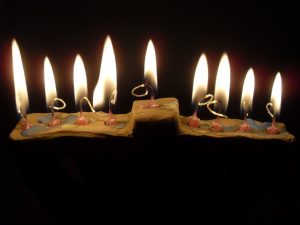
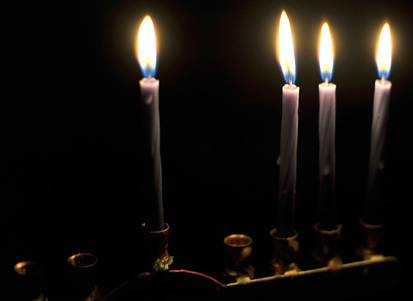
Chanukah is a holiday of noticing miracles and noticing the way that they are sometimes hidden and unexpected. God does not always enter into our lives as the gigantic special effects moment of the parting of the sea. More often, God comes as softly flickering lights in the darkness that help us remember who we are and where we are going.
You know, there is a song we sing during Chanukah that goes like this:
“Who can retell the things that befell us? Who can count them? In every age a hero or sage came to our aid!”
Who is the hero of that song? Who is the song talking about when it praises heroes and sages?
The opening line of the song is actually a paraphrase of a Psalm. It’s Psalm 116, which opens:
Mi yimalel g'vurot Adonai, yashmia kol t'hilato!
Who can retell the mighty acts of Adonai, proclaim all God’s praises!
Even when we sing our songs, just as in this week’s Torah portion, we sometimes let God’s presence step into the background. We sometimes let the human beings take control of the story. That is as it should be. We need to live our lives as if our fate is in our own hands. We need to take responsibility. We need to learn to be the heroes of our own lives.
But we also need to remember, once in a while when we really need it, or when it comes crashing down upon us in a moment of crisis, that there is a Presence ready to help us. We need to notice the quiet and unnamed character at the edges of our story, guiding us, loving us, bringing light into our darkness.
Shabbat shalom.


 RSS Feed