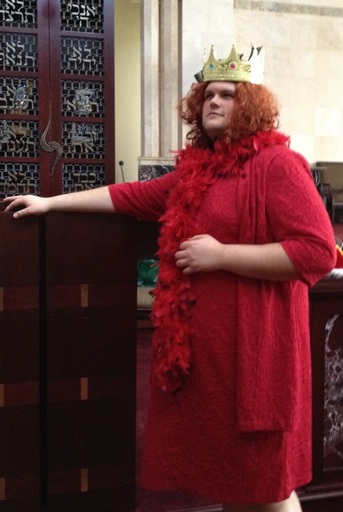
For those who want to relive a bit of Purim, here is the video of the Purim Shpiel at Temple Beit HaYam. The shpiel was performed by Don Matlin, Terrie Welz, Beth Pennamacoor, Karl Drehobl, Jerry Shapiro, Steve Rozansky, Sam Friedman and Roseann Conrad. The script was created with the amazing talents of David Lane. Credit and gratitude for the creation of the video goes to Ruben York. Thanks to one and all. 
 
 
On the contrary, if you keep silent in this crisis, relief and deliverance will come to the Jews from another quarter, while you and your father's house will perish. And who knows, perhaps you have attained to royal position for just such a crisis.
-Esther 4:14 (JPS Translation)

My favorite verse in the whole Megillah comes after Mordechai tells Esther about Haman's plans and asks her to intercede before the king. Esther protests that she would risk death if she appeared before the king without being asked. Mordechai answers by telling her that this may be the very moment for which she has become queen.

The careful use of language here—the hedging of "perhaps" and the unnamed agency by which Esther has become queen—all point to Purim's hidden theme. God is never mentioned in the Megillah, but can be found between every line.

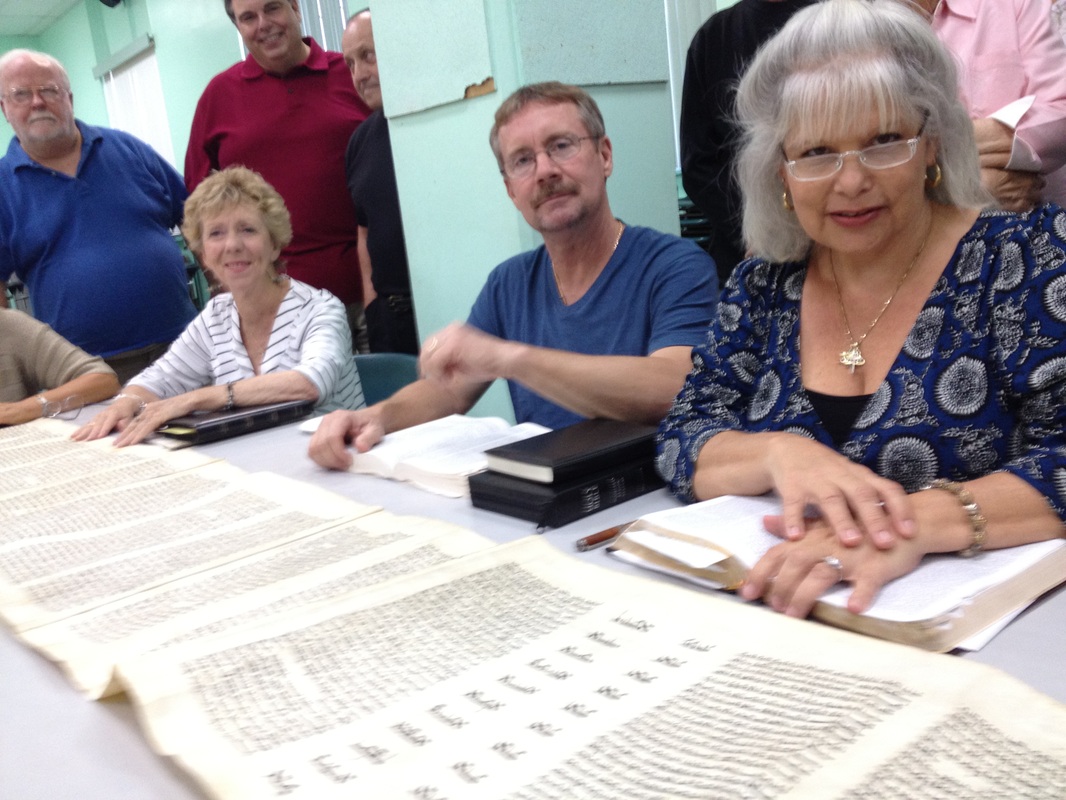
There is an Ashkenazic custom of writing a Scroll of Esther so that the word, HaMelech, "The King," appears as the first word of almost every column. In the literal story of Purim, "The King" means the dopey, drunken Achashveirosh. However, in the hidden story, the king at the top of each column is the King of Kings of Kings, the Holy Blessed One, pulling the strings and setting the story's course.

So it is in our lives. People say, "Oh, God," in moments of exasperation, anxiety or delight, and they think that they are just using an expression. Yet, the words betray a hidden presence. In the moments that matter most in our lives, we want to know that we are not alone in the universe. We want to know we have a reason for being here.

Mordechai says to Esther, "Who knows?," because God's presence is sometimes better left as a question than an answer. Perhaps God only peeks around the corners of our lives. Perhaps we are better off seeing ourselves as the agents of our own destinies, as Mordechai and Esther are portrayed in today's story. Purim is the holiday for celebrating our mastery of our own fate, and that's good. Yet, there is always that question—"Who knows?"—hovering unnamed at the top of every column.

Who knows? Perhaps you have a purpose, too.


Other Posts on This Topic:
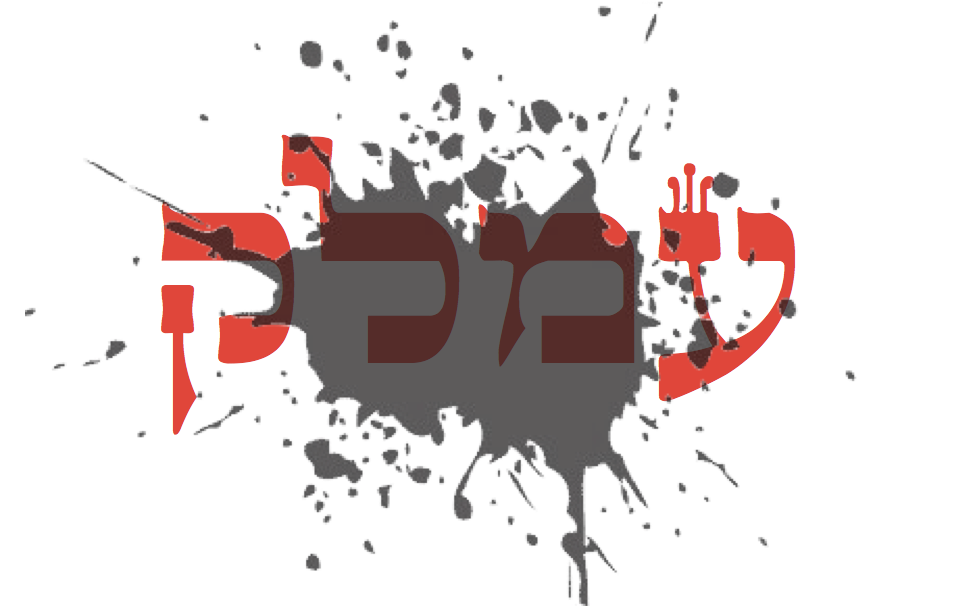
Miketz: Deception
 
 
There was a young lady from Shushan
Who knew how to put the right moves on.
Haman plotted a ruse
For to murder the Jews,
But Esther defied that conclusion.


Purim tonight. Potluck dinner at 6:30 p.m. Purim Shpiel at 7:30 p.m.
Be happy. It's Adar.
 
 
Today, Sunday, our religious school had its annual Purim carnival. This is a mainstay of many congregations at Purim. The youth group organizes games and other entertainment for the younger kids and charges admission or a fee for each game. It is a fundraiser for the youth group that helps them pay for their programs and trips throughout the year.

I agreed to participate in this year's carnival by helping with a game in which kids throw shaving cream pies at Haman. And, yes, my job was to be Haman.  There's a video clip above to attest to the indignity of it all. 

(By the way, I was joking about "fifty bucks a throw." It was actually three dollars. This booth raised about $120 for our youth group. Not bad.)

I know that there were at least a few parents watching today who wondered, "Is it right that our rabbi should be doing this? What does it teach our kids that they can throw shaving cream pies at the rabbi—even in the spirit of Purim merriment?" Well, I have to admit that I thought about that, too.

There actually is a discussion in traditional Jewish law about this question. Are there activities that should be considered beneath the dignity of a rabbi? 

The proof text that generally is used in this discussion comes from the book of Samuel. When King David brought the Ark of the Covenant to the City of David, there was a boisterous celebration with dancing, shouting, music and shofar blasts (II Samuel 6). When David's wife, Michal, saw her husband "leaping and whirling," she despised him for it. Michal was born a princess, the daughter of King Saul. She felt that to behave as David did was beneath the dignity of the successor to her father's throne. 

When David came home, Michal gave him what for. She spoke sarcastically to him: "How well did the King of Israel honor himself today by exposing himself to the eyes of his subjects' slave girls in the way that one of the riffraff might expose himself!" (II Samuel 6:20). 

David answered by telling Michal that he danced with the Ark in order to serve God. "I will dance before Adonai and dishonor myself even more and I shall bring myself low in my own eyes; but among the slave girls of whom you speak, I shall be honored" (II Samuel 6:21-22).

The Bible clearly has a negative view of Michal's reproach. It states that because of this incident she never gave birth. David, on the other hand, is viewed positively for his willingness to subvert his own dignity for the sake of honoring God. David knew that by lowering himself before God, he actually lifted up the way he was perceived. From this, Jewish legal scholars conclude that the dignity of a leader, such as a rabbi, is not compromised when his or her actions are seen as the fulfillment of God's commandments (See, for example, Bei'ur Halachah, Siman 250). 

Now, I don't bring this up in order to say that I was as righteous as Kind David, or to suggest that I acted today to raise my prestige in the eyes of our congregation. The point I want to make is a more global statement about Judaism, rabbis, dignity and joy.

I want Jewish children to know that Judaism wants us to experience the leaping joy of the human heart. I think a rabbi can sacrifice a bit of his or her dignity if it helps to show children (and the child in all of us) that Judaism is more interested in celebrating God with ecstatic joy than it is in the solemn dignity of human beings.

Rabbis (including myself) can be a pretty stuck-up bunch. We display ourselves as spiritual exemplars and we believe that our behavior sets the standard for the community. We are mindful that the way we are perceived shapes the way that the Jewish people as a whole are perceived. I believe that all of this is right. Rabbis should live in awe of the responsibility to act accordingly.

Yet, there also is a need to lighten up a bit. If awe and dignity are all that people see in rabbis, they will assume that this is all there is to Judaism. We owe them so much more. A rabbi also has to be an exemplar of life lived with joy. What better opportunity is there for doing that than Purim? 

Celebrate God by living outrageously, proudly and joyfully. Live with dignity, yes, but never forget that the purpose of dignity is not to aggrandize ourselves. Dignity is a good thing only to the extent that it helps us remember that our lives matter. We live every moment in the presence of an awesome God.


Other Posts on This Topic:
Counting from Freedom to Covenant: Nobility
 
 
Purim Ditty

Welcome to Purim, holiest day of the year. 
Sanctity and profanity merge in
A time so lost beyond the horizon
We lose the Name.

Haman and Mordechai now are drinking buddies,
Old pals who trade stories. 
Meaning fades and concepts melt--
They were only windows, after all, 
That peer into immeasurable truth.
There are no boundaries here.

After a few, the two stumble home,
Their heads spinning, adlayada.
They fumble keys, feed the cat,
And wake sober on Pesach,
Each in the other one's bed.

Welcome to Purim, holy of holies,
Fulfillment of the solemn cycle.
Miracle and revelation,
Sorrow and celebration,
Find strange completion 
In this day of days.
All others we toss away to say
We finally have remembered to forget.


Other Posts on This Topic: 
Imagine There's No Haman
 
 
This week's Torah portion (Tetzaveh) includes a description of a strange pair of objects used by the ancient Israelites as tools of divination. The Urim and Tumim were kept in the breastplate worn by the High Priest, and, it appears, he used them to discover things seen only by God. 

The idea of having a window that allows human beings to peek into the mind of God may make us feel both curious and wary. It seems that the Hebrew Bible itself also has mixed feelings about using games of chance to reveal the divine. 
Picture
At the center of the seal of Yale University are two Hebrew words, "Urim and Tumim." these are the names of the oracular devices used by the High Priest of Israel to discover the will of God. There is an interpretive tradition of associating the words with "light and purity," hence the Latin phrase, Lux et Veritas, "Light and Truth."
The Torah says, "You shall place inside the breastplate of judgment the Urim and Tumim and they shall be over Aaron’s heart whenever he comes before Adonai. Thus, Aaron shall carry the judgment of the Israelites over his heart before Adonai always" (Exodus 28:30). 

A passage in the book of Samuel shows the Urim and Tumim in action. When King Saul believed that a member of the Israelite army had committed a sin that removed God's favor, he used the Tumim to discover who was at fault. The text says that Saul separated himself and his son Jonathan from the troops and used the Tumim to determine whether the fault was with Jonathan or the rest of the army. The Tumim showed that it was Jonathan who had sinned. He then confessed his actions (I Samuel 14:41). 

The idea of using special objects as oracles to divine secret knowledge existed in many cultures of the ancient world. Think of the Urim and Tumim as a special pair of dice that a king or high priest could throw to determine a propitious date for attacking an enemy or discovering a source of divine disfavor. The Urim and Tumim were instruments of selection that helped their user discover meaning and sense in a world of seeming chaos and uncertainty.

In that respect, the Urim and Tumim are rather like the Torah itself. They were a guide to finding a right path in a world that seems to be all wilderness.

The lovely irony is that, during the very time of year when we read about the Urim and Tumim in the Torah, their exact counterpart appears in an upcoming holiday. Purim, of course, is the holiday named for pur, the selection tool used by the evil Haman to discover the date for the destruction of the Jews. The book of Esther tells how, "In the first month, the month of Nisan, in the twelfth year of King Achashveirosh, pur (which means 'the lot') was cast before Haman concerning every day and every month, until it fell on the twelfth month, the month of Adar" (Esther 3:7). 

In the Purim story, Haman's use of the pur is a kind of inside joke. Haman is depicted as an evil and superstitious man who denies God. He believes in a universe without rules that is governed only by strength and power, not by ethics or righteous divinity. His reliance on the pur is a statement about his allegiance to a random universe. 

The joke is that, when Haman casts the pur, the date revealed—seemingly by chance—is nearly the last possible day on the calendar. Nisan is the first month of the year; Adar is the last. Poor Haman cast his dice on New Years Day to find out when he would realize his dream. The dice landed on the equivalent of December 15th. Haman would have to wait eleven and a half months—plenty of time for his intended victims to discover his plan and prepare their defense. 

The book of Esther, famously, is the only book of the Hebrew Bible that does not contain the name of God. Yet, God's presence is felt everywhere in it. God appears as the unnamed source of strange coincidences that show a higher power at work against the forces that worship only human might.

The relationship between the Urim and Tumim, on one side, and the pur, on the other, is paradoxical. Both appear to be instruments of random selection, but their meaning is opposite. Haman selected his date with a pur because he believed in chaos. A random selection device, according to this view, would reflect the nature of a random universe. The high priests and kings of Israel, on the other hand, used the Urim and Tumim because they believed in an underlying order hidden beneath the seeming disorder of reality. This device that freely chooses among options, to them, would have been like a compass that points to the true north of God's will, revealing the hidden pulse of God's magnetic field of meaning.

What do you believe? Do you, at a fundamental level, believe that there are reasons and purposes within the universe that usually are hidden beyond the reach of our senses? Or, do you believe that your presence in the world is just the product of a long series of meaningless coincidences? Either position can be defended, yet it is difficult to see how both can be true. 

Shall you choose one or leave it to chance?


Other Posts on This Topic:
Tetzaveh: Keeping the Fire Burning
Ekev: Deuteronomy vs. Job
 
 
Imagine There's No Haman

Imagine there's no Haman 
It's easy if you try 
No efforts to destroy us 
No need to wonder why 
Imagine all the people 
Living for God’s way! 

Imagine there's no hatred 
It isn't hard to do 
No one to bow down to
And no rulers too 
Imagine all the people 
Living life in peace 

You may say that I'm a dreamer 
But I'm not the only one 
I hope someday you'll join us 
Purim joy for everyone!

Imagine no humiliation 
I wonder if you will 
No need for greed or hunger 
All can eat their fill 
Imagine all the people 
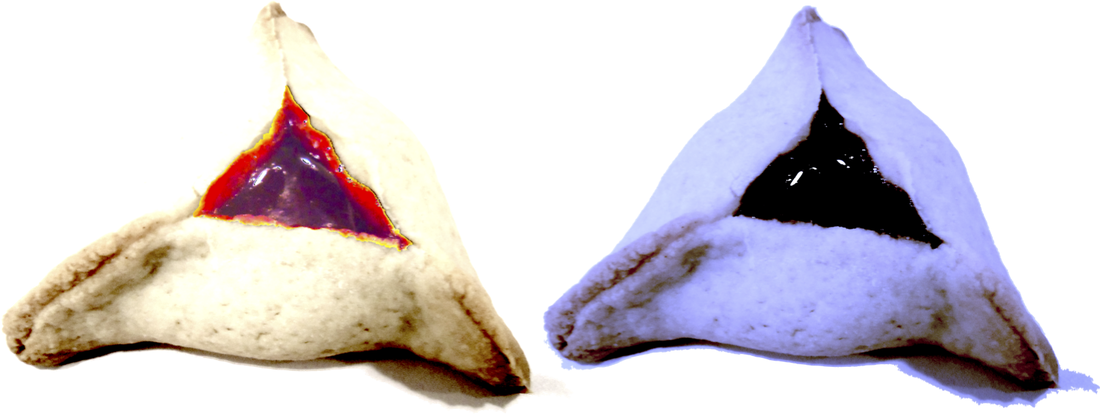
Noshing hamantaschen! 

You may say that I'm a dreamer 
But I'm not the only one 
I hope someday you'll join us 
Purim joy for everyone!
 
 
If there is one Jewish holiday that screams out "joy," it has to be Purim. Yet, I'm sure that there are things we can do to make Purim an even better expression of joyous Judaism.
Instead of going through another year of  the same old youth group carnival, the same old spiel of Broadway retreads, and the same old dry Megillah reading, we can learn from each other to create a Purim of real, heartfelt joy. Come on, people, I want to hear your best ideas!

My friend, Rabbi Riqi Kosovske of Congregation Beit Ahavah in Northampton, Massachusetts, has a couple of ideas that I really love. Her congregation is currently planning its third annual "Queen Esther's Drag Ball," a Purim night event for adults held at a local dance club. The following day they will have their fourth annual "Megillah Reading and Purim Justice Fair." Rabbi Riqi says she got the idea of a "justice fair" from IKAR, the joyful and innovative congregation in Los Angeles. 

She explains that, in her congregation's Purim fair, there are no junky plastic prizes. For an entry fee of two to five dollars (discounts for those in costume), participants play games to win "Mitzvah Money."  The Mitzvah Money is awarded freely at the booths where participants play different kinds of games. After playing, participants take their winnings to the "Justice Table" where they can divide it any way they wish by placing it into six large tzedakah boxes. Each box has the name of a social justice organization and a poster that explains what the organization does. At the end of the evening, members of the youth group count the Mitzvah Money in each box to determine the percentage that each organization will receive of the money raised at the event.

I love this idea because it gets right to the heart of what I mean when I say that we need innovative ideas to make Judaism more joyful. It promotes broad community participation in an activity that is fun, memorable and makes people feel good about being Jewish. Most importantly, it gives meaning to the holiday and reinforces the mitzvah of Matanot LaEvyonim—making gifts to the needy on Purim.

What are your best ideas for making Purim even more joyful? Please respond with your comments so that your ideas can be planted like seeds in Jewish communities everywhere to create  a more joyful and meaningful Judaism.